
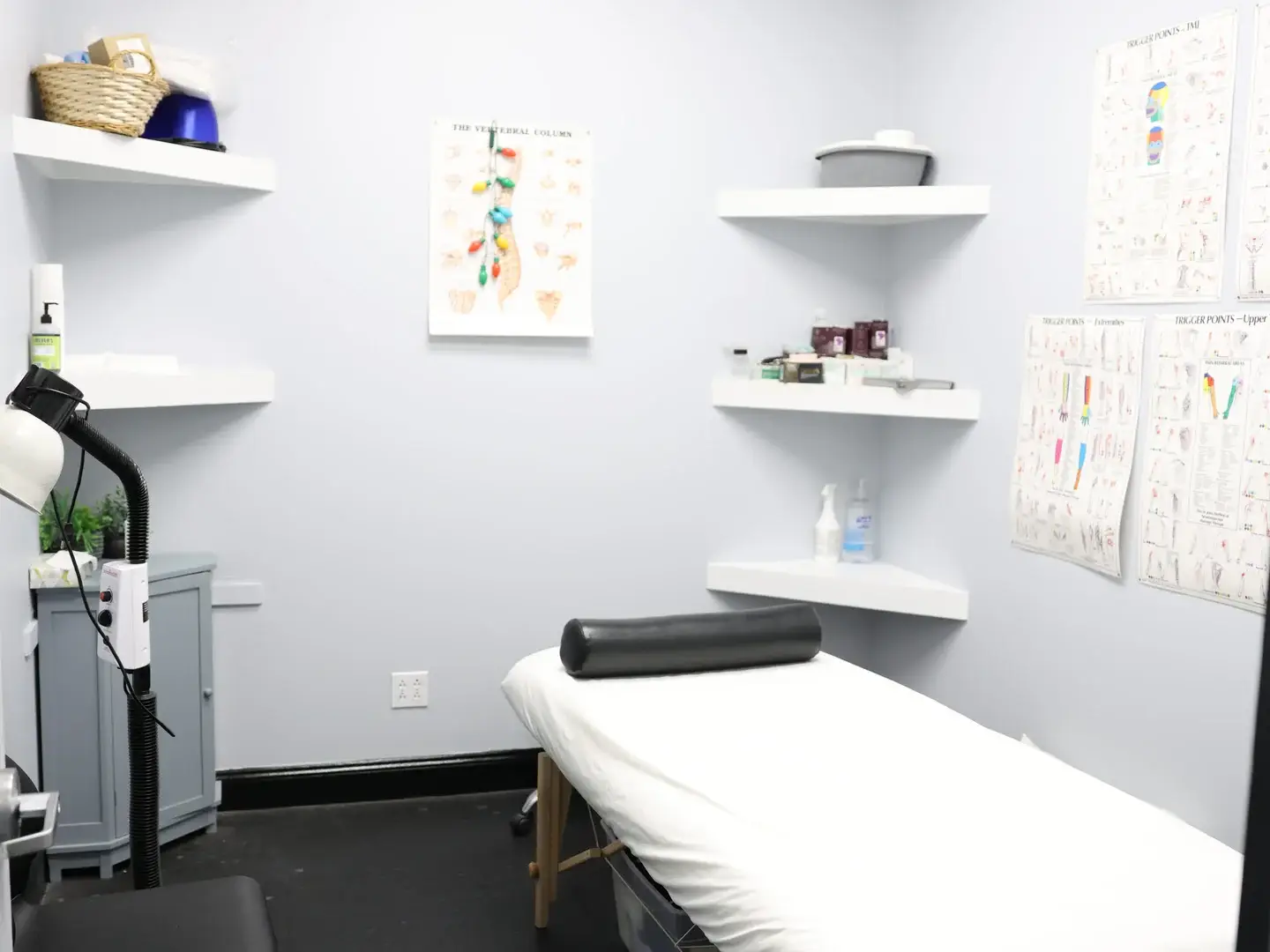
Medical massage at Physical Medicine & Rehabilitation of NY & CT (PMR) is massage with a clinical purpose. Your treating doctor and massage therapist plan it together around a specific problem, such as a tight lower back, a stiff neck after a car accident or a strained hamstring, and it often runs alongside chiropractic care or physical therapy. Massage therapy is available at both PMR offices, in Danbury, CT and Brewster, NY.
How medical massage differs from a spa massage
A spa massage is mainly about relaxation, and that has value. Medical massage, sometimes called therapeutic massage, starts from your diagnosis. Your therapist knows what your doctor found, which muscles are involved and what the rest of your plan is working toward. Pressure and techniques change as you heal, and your doctor and therapist review whether massage is helping.
How your massage plan is built
Before hands-on work begins, your doctor and massage therapist talk with you about:
- your symptoms and medical history
- your job and the postures or tasks that load your body
- your stress level and daily routine
- what you want massage to help with
Your therapist also assesses by touch, feeling for tight bands, tender points and how much pressure you tolerate. Then they decide whether to focus on one area, such as your neck and shoulders, or work more broadly. The doctor overseeing your care keeps massage in step with your chiropractic care or physical therapy.
Techniques and therapists
Here’s what the common terms mean:
- Trigger point therapy uses sustained pressure on tight, tender knots that can send pain to other areas.
- Deep tissue massage uses slower, firmer strokes to reach deeper layers of muscle. Deeper doesn’t have to mean painful.
- Sports massage focuses on the muscles you train hardest, around heavy training or during injury recovery, and fits with PMR’s sports medicine care.
Massage therapists are licensed in both New York and Connecticut.
What a session is like
You’ll have privacy to undress to your comfort level, then lie on a padded table under a sheet, with only the area being treated uncovered. Your therapist checks in about pressure throughout, so speak up if something feels like too much or not enough.
What medical massage may help with
Massage won’t change the structure of a disc or joint, but for many people it can:
- ease pain for a while, especially muscle pain in the back, neck and shoulders
- reduce muscle tension and guarding after an injury
- make it easier to move, so stretching and exercise feel more comfortable
- help you relax, which can make pain easier to manage
These effects are often short-term and vary from person to person. That’s why PMR pairs massage with active care and a home program rather than using it on its own.
When to skip or adjust deep work
Tell your therapist about your health before each session. Deep pressure may need to be avoided or modified if you have:
- a recent injury or surgery
- a history of blood clots, a bleeding disorder or blood-thinning medication
- a skin infection, rash, open wound or recent burn in the area
- fragile bones from osteoporosis, or a recent fracture
- a fever, or you feel unwell
If you’re pregnant or being treated for cancer, tell your therapist and doctor. They can adjust or postpone massage as needed.
Insurance for massage therapy
Coverage for massage varies by plan and often depends on whether it’s part of a provider’s treatment plan. PMR’s billing office can review your benefits at (203) 744-8014.
When to get urgent care
Some symptoms need a doctor right away, not a massage. Get emergency help by calling 911 or going to the ER if you notice:
- a swollen, warm or painful calf or leg, especially with shortness of breath
- chest pain or pressure
- a face that droops, slurred speech, or an arm or leg that suddenly goes weak
- severe pain after a fall, crash or sports collision
Frequently asked questions
Is medical massage the same as deep tissue massage?
Not exactly. Deep tissue massage is one technique that uses slower, firmer pressure to reach deeper muscle layers. Medical massage describes the purpose and setting: massage planned around a diagnosis and coordinated with your other treatment. A session might include deep tissue work, lighter techniques or trigger point therapy, depending on your problem and what your body tolerates that day.
Does clinical massage hurt?
It can feel intense at times, especially over tender knots, but it shouldn’t hurt enough to make you tense up or hold your breath. Your therapist adjusts pressure as you go and checks in often. Mild soreness for a day or two afterward is common after deeper work. If soreness lasts longer, tell your therapist so the next session can be adjusted.
How often should I schedule massage sessions?
It depends on your goals and the rest of your plan. During recovery from an injury, massage may be scheduled alongside chiropractic or physical therapy visits for a set period, then spaced out as you improve. Your doctor and therapist review your progress and adjust the frequency, and if massage isn’t helping after a short trial, they’ll suggest a different approach.
Can I book a massage without seeing a doctor first?
Massage at PMR is designed to work within a care plan, so your doctor’s findings guide what your therapist does. If you’re already a PMR patient, ask at your next visit whether massage fits your plan. New patients can call the nearest office to ask how to start.
Further Reading
Book a massage appointment
Massage is one of several PMR services offered at every office. Call the one nearest you or request an appointment online.
- Danbury, CT massage therapy: (203) 744-8013
- Brewster, NY massage therapy: (845) 279-1135
Plan your visit to PMR
Choose the PMR office that is convenient for you: Danbury, Connecticut or Brewster, New York. Visit the office page for directions, hours, and team information. Contact the team to discuss the care you need and appointment availability.