Physical Medicine & Rehabilitation of NY & CT (PMR) offers physical therapy services at two offices: Danbury, CT and Brewster, NY. Physical therapy uses guided exercise, hands-on treatment and education to help you move with less pain, rebuild strength and get back to what matters to you.
How our physical therapy services work
A detailed evaluation
Your first session starts with your story: what happened, what hurts and what you want to get back to. Your physical therapist then tests:
- strength in the muscles around the problem area
- joint range of motion and flexibility
- balance, coordination and endurance
- posture and how you bend, squat, reach and walk
- sensation and reflexes, when a nerve may be involved
A plan of care built around your goals
Next, your therapist explains the findings and sets measurable goals with you, such as climbing stairs without pain, lifting your child or running again. Your plan of care spells out the treatments, how often you’ll come in and when you’ll be re-tested.
Manual therapy
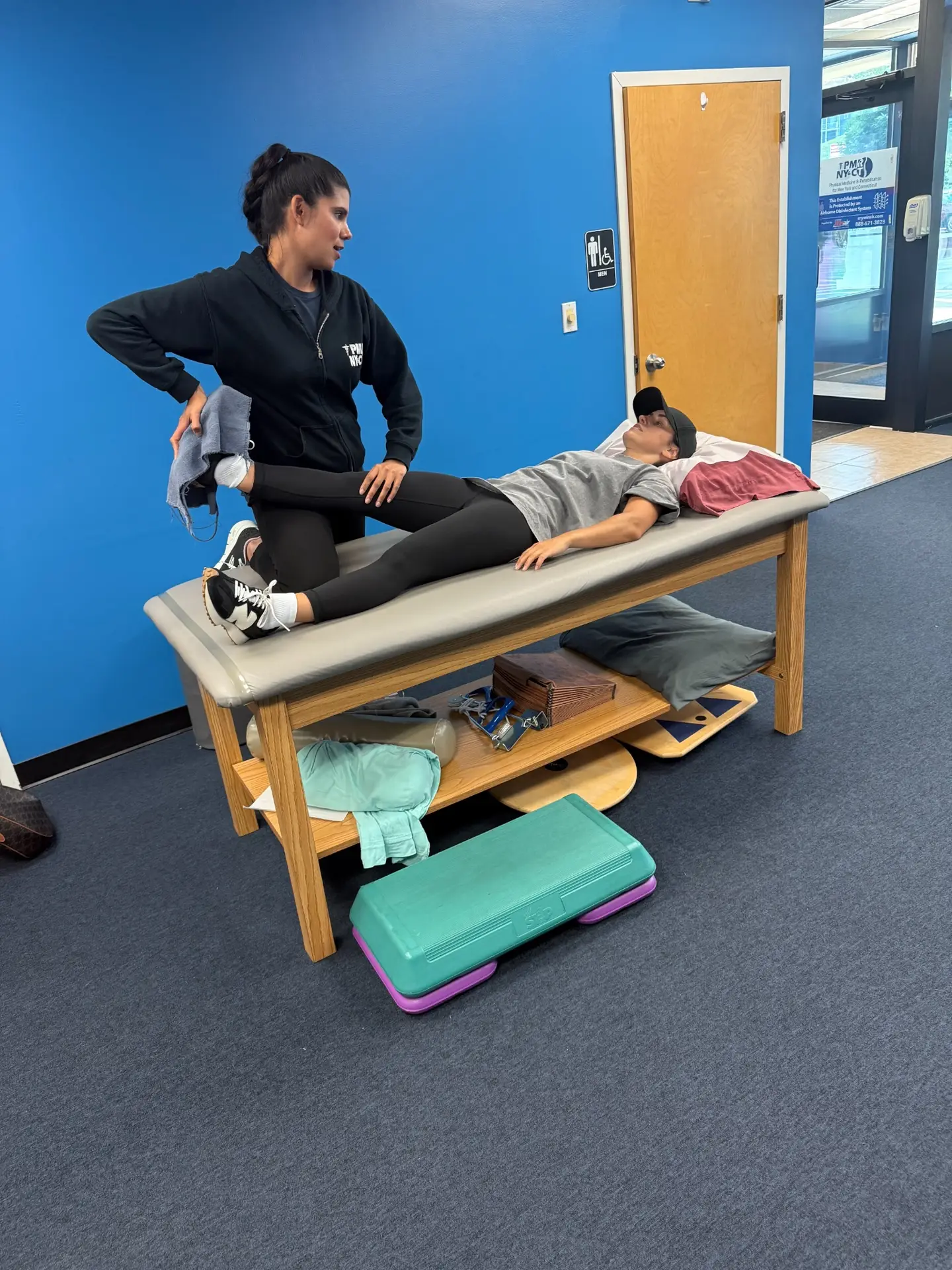
Manual therapy is hands-on treatment, such as joint mobilization to ease stiffness, soft-tissue mobilization for tight or tender muscles, and assisted stretching. It’s often used early in care to calm pain and make exercise easier.
Therapeutic exercise in an on-site gym
Therapeutic exercise is the core of most plans, and each exercise has a job: strengthening weak muscles, restoring motion, improving balance or teaching your body to handle load again. PMR has on-site gym facilities and trainers, so you practice with real equipment and feedback rather than a sheet of stick figures. Your therapist also coaches body mechanics for lifting, sitting and work tasks to protect the area while it heals.
A home program and regular progress checks
You’ll get a short home program that fits your day, updated as you get stronger. At set points, your therapist re-tests strength, motion and function and compares the results with your first visit. If you’re improving, exercises get harder and visits get fewer. If you’re not, the plan changes, or your therapist talks with your doctor or another PMR clinician about next steps.
Who physical therapy can help
PMR’s physical therapy services can help people of all ages and activity levels, including those with:
- back and neck pain, including disc problems and sciatica
- sports injuries such as sprains, strains and tendon pain
- recovery after joint replacement, ligament repair or spine surgery, through post-surgical rehab
- arthritis and stiff, painful joints
- balance problems, dizziness and vertigo, through vestibular rehabilitation
- pain from repetitive motion or a physically demanding job
Results vary. Your therapist will be straightforward about what to expect.
Your physical therapy team
When your plan needs more than one approach, your therapist can coordinate with PMR’s other treatment services, such as chiropractic care, massage and physiatry.
Direct access physical therapy in New York and Connecticut
Both states let you start with a qualified physical therapist without a referral. The limits differ by state.
New York (Brewster office)
Under New York Education Law Section 6731, a licensed physical therapist with at least three years of full-time practice may treat you without a referral for 10 visits or 30 days, whichever comes first. The therapist must give you written notice about coverage. After that, you’ll need a referral to continue.
Connecticut (Danbury, CT offices)
Under Connecticut General Statutes Section 20-73, a qualifying physical therapist may treat you without a referral. The therapist must confirm who your primary care provider is and must refer you out if there’s no measurable improvement within 30 days or 6 visits, whichever comes first.
When you still need a referral
- New York no-fault car accident claims and New York workers’ compensation claims require a referral for physical therapy.
- In Connecticut workers’ compensation cases, if your employer has an approved medical care plan, you must use its providers; without one, your employer directs your initial care.
PMR submits claims for you. To check your plan ahead of time, use the coverage form on our insurance and billing page or call (203) 744-8014.
When to get urgent care
Physical therapy supports recovery, but some symptoms need emergency care first. Call 911 or go straight to the ER for:
- calf pain, swelling and warmth after surgery, or sudden shortness of breath or chest pain, which can signal a blood clot
- sudden weakness or numbness on one side, a drooping face or slurred speech
- new trouble controlling your bladder or bowels, or numbness between your legs
- a fall or injury with severe pain, an obvious deformity or inability to bear weight
Frequently asked questions
Do I need a referral for physical therapy?
Often not. In New York, a qualified physical therapist can treat you without a referral for up to 10 visits or 30 days, whichever comes first. In Connecticut, a qualifying therapist can treat you without one but must refer you out if you don’t measurably improve within 30 days or 6 visits. New York no-fault and workers’ compensation claims need a referral, and some insurance plans do too.
What should I bring to my first physical therapy visit?
Bring photo ID, your insurance card and a list of the medications you take. If you have them, also bring a referral or prescription, imaging reports and, after surgery, your surgeon’s rehab protocol. For a car accident or work injury, bring your claim number and the insurer’s or employer’s contact details.
How many physical therapy visits will I need?
It depends on your condition, how long you’ve had it, your overall health and your goals. After your evaluation, your therapist can give you an estimate, then re-test your progress at regular check-ins and adjust. Visits are often more frequent early on and taper as your home program takes over.
How is physical therapy different from chiropractic care?
They overlap, since both treat muscle, joint and movement problems. Chiropractic care centers on joint manipulation and hands-on treatment of the spine and joints. Physical therapy leans more on progressive exercise, functional training and rehab after injury or surgery. At PMR you don’t have to choose, because your chiropractor and physical therapist can work from one shared plan.
Schedule physical therapy
To start physical therapy services, pick the most convenient office. Then call or request an appointment online.
- Danbury, CT physical therapy: (203) 744-8013
- Brewster, NY physical therapy: (845) 279-1135