
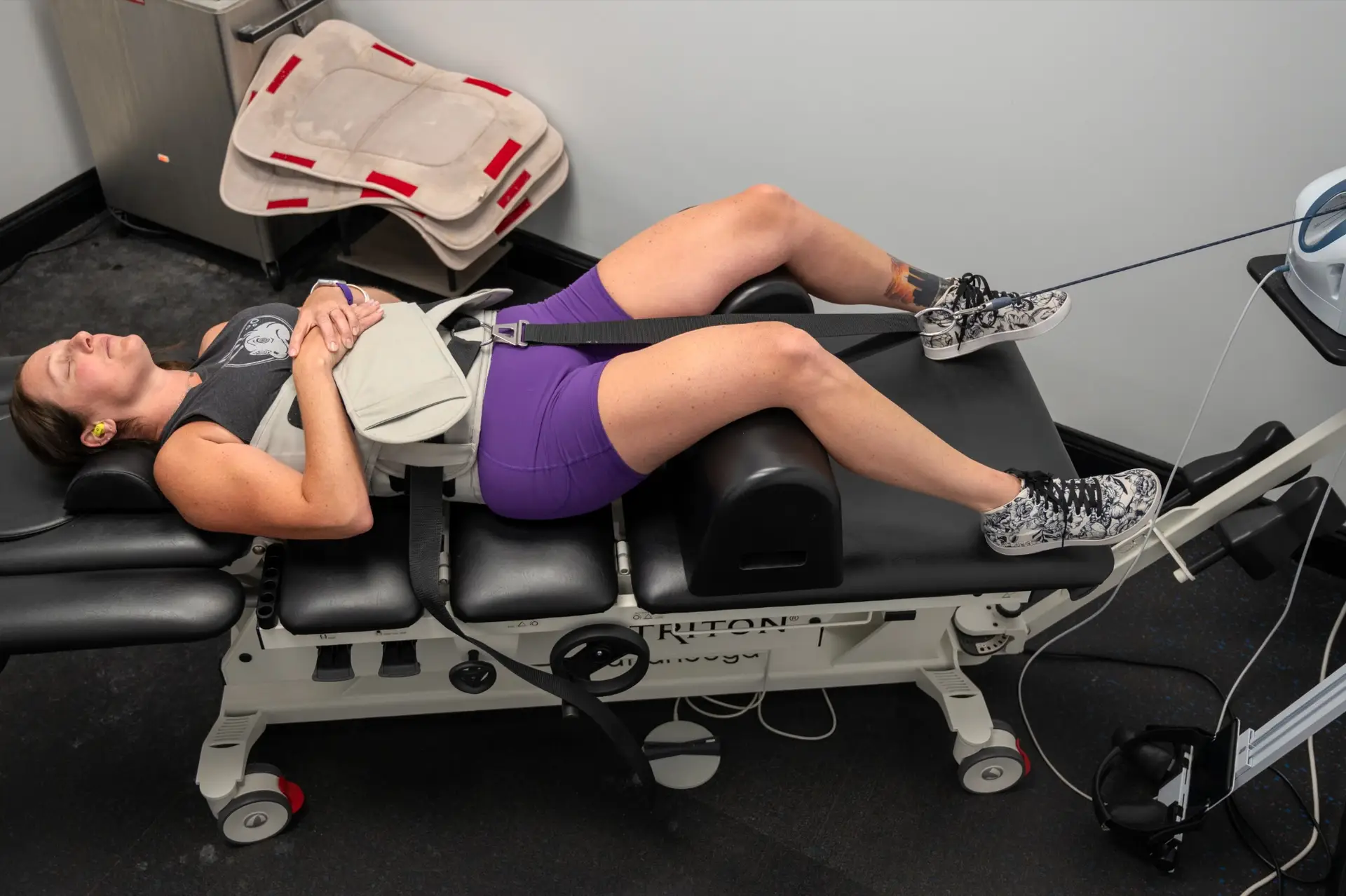
Spinal decompression therapy is a non-surgical, computer-controlled form of traction that gently stretches the spine to take pressure off discs and irritated nerves. At Physical Medicine & Rehabilitation of NY & CT (PMR), we provide it on a DTS table for both the neck (cervical decompression) and the low back (lumbar decompression) at both of our offices. It starts with a full evaluation and, in most cases, is combined with exercise and hands-on care.
What is non-surgical spinal decompression?
Traditional traction applies a steady or simple on-and-off pull. A decompression table adds computer control: the pull ramps up slowly, holds and relaxes in programmed cycles. Building force gradually may help your muscles stay relaxed, so the stretch reaches the joints and discs.
The theory is that briefly lowering pressure inside a disc may help a bulge ease away from a nearby nerve and encourage fluid and nutrients to move into the disc. These ideas are plausible but not confirmed by strong research.
The DTS table: lumbar and cervical decompression
Every session is programmed and supervised by a chiropractor, who sets the force and timing for your body and symptoms.
Lumbar decompression
For the low back, a belt-style harness fits snugly around your pelvis and a second one around your rib cage. The upper harness anchors your trunk while the table draws your pelvis gently away, directing the stretch through the lower spine. Knees are usually supported so your back can stay relaxed.
Cervical decompression
For the neck, a padded headpiece contacts the bony ridge at the base of your skull. The table uses a small fraction of the force needed for the low back, aiming to open space around nerve roots that may be causing neck pain or symptoms in the arm.
Conditions spinal decompression therapy may help
Decompression is most often considered for:
- Herniated and bulging discs: decompression for herniated disc pain is one of its most common uses. See herniated disc treatment.
- Sciatica and other nerve-root pain: pain, tingling or numbness traveling into a leg, or into an arm from the neck.
- Degenerative disc disease: age-related disc changes that cause recurring flare-ups.
- Some cases of spinal stenosis: mild to moderate narrowing, when your exam suggests decompression is reasonable.
Who is a good candidate?
You may be a candidate if your exam points to disc or nerve-root irritation, your pain has lasted more than a few weeks or keeps returning despite home care, and you’d like to try a conservative option before considering injections or surgery.
Decompression is ruled out by:
- Pregnancy
- A spinal fracture, severe osteoporosis or a spinal tumor
- A spinal fusion, screws, rods or an artificial disc
- A spinal infection or an abdominal aortic aneurysm
- A vertebra that has slipped significantly out of line, or other spinal instability
- Upper-neck instability, including from rheumatoid arthritis (for cervical sessions)
Your evaluation includes a history, a physical exam, tests of strength, reflexes and sensation, and movement testing. PMR also offers X-ray imaging and EMG nerve testing when they’re needed to clarify the picture.
What a decompression session is like
You’ll lie on the padded table while the harnesses or headpiece are fitted. As the program runs, you’ll feel a gradual stretch that builds, holds and eases off in a steady rhythm. It should never feel sharp, and your clinician can change the settings or stop at any time. Many visits also include exercise, heat, electrical muscle stimulation or cold laser therapy for muscle spasm.
What the research says
Research on spinal decompression therapy, often called motorized decompression in studies, is limited. Many studies are small or lack strong comparison groups, and reviews haven’t clearly shown that it works better than standard traction or exercise-based care for low back pain. For neck pain that travels into the arm, some research suggests traction may help when combined with exercise and hands-on treatment.
Results vary from person to person. Many disc-related symptoms also improve over weeks to months with conservative care. Staying active and doing targeted exercise have stronger support for most back and neck pain, which is why decompression at PMR is paired with them.
Decompression as part of a team plan
Because PMR brings chiropractic care, physical therapy, massage therapy, acupuncture, physiatry and diagnostics under one roof, spinal decompression therapy can be combined with whatever else your plan needs. As pain settles, the emphasis shifts to core and hip strength, posture and movement habits that protect your spine. When symptoms point elsewhere, we coordinate with your physician or surgeon. Browse all of our services to see how they fit together.
Insurance and cost
Whether your plan pays for decompression depends on the policy. PMR files claims with most insurance companies and goes over your benefits at the first appointment. Questions? Call our billing office at (203) 744-8014.
When to get urgent care
Call 911 or go to an emergency room for:
- Losing control of your bladder or bowels, or numbness in the saddle area (groin, buttocks and inner thighs)
- Weakness in an arm or leg that’s getting worse quickly, or new trouble walking
- Spine pain along with fever or chills, or following a major fall or crash
- Stroke warning signs: a drooping face, arm weakness or slurred speech
Frequently asked questions
How many decompression sessions will I need?
It depends on your condition, how long you’ve had symptoms and how you respond. Visits are often more frequent at first and taper as you improve. We set checkpoints along the way, and if you aren’t making progress, we change the plan or refer you rather than adding visits.
Can decompression repair a disc or restore disc height?
That hasn’t been shown. Decompression may ease pressure on a disc and nerve during treatment, and some people feel less pain over the course of a plan. But research doesn’t confirm that it rebuilds disc tissue or reliably restores disc height. We measure progress by your symptoms, strength and function.
Can I have decompression after back surgery?
It depends on the surgery. Decompression isn’t used over a fusion, screws, rods or an artificial disc. After other procedures, such as a discectomy, we need details from your surgeon and their clearance before considering it. In many post-surgical cases, a structured physical therapy program is the safer place to start.
Book an appointment
Start with an evaluation at the office closest to you:
- Spinal decompression in Danbury, CT: PMR of Danbury, CT, 1 Padanaram Road, (203) 744-8013
- Spinal decompression in Brewster, NY: PMR of Brewster, NY, 1620 Brewster Town Center, (845) 279-1135