
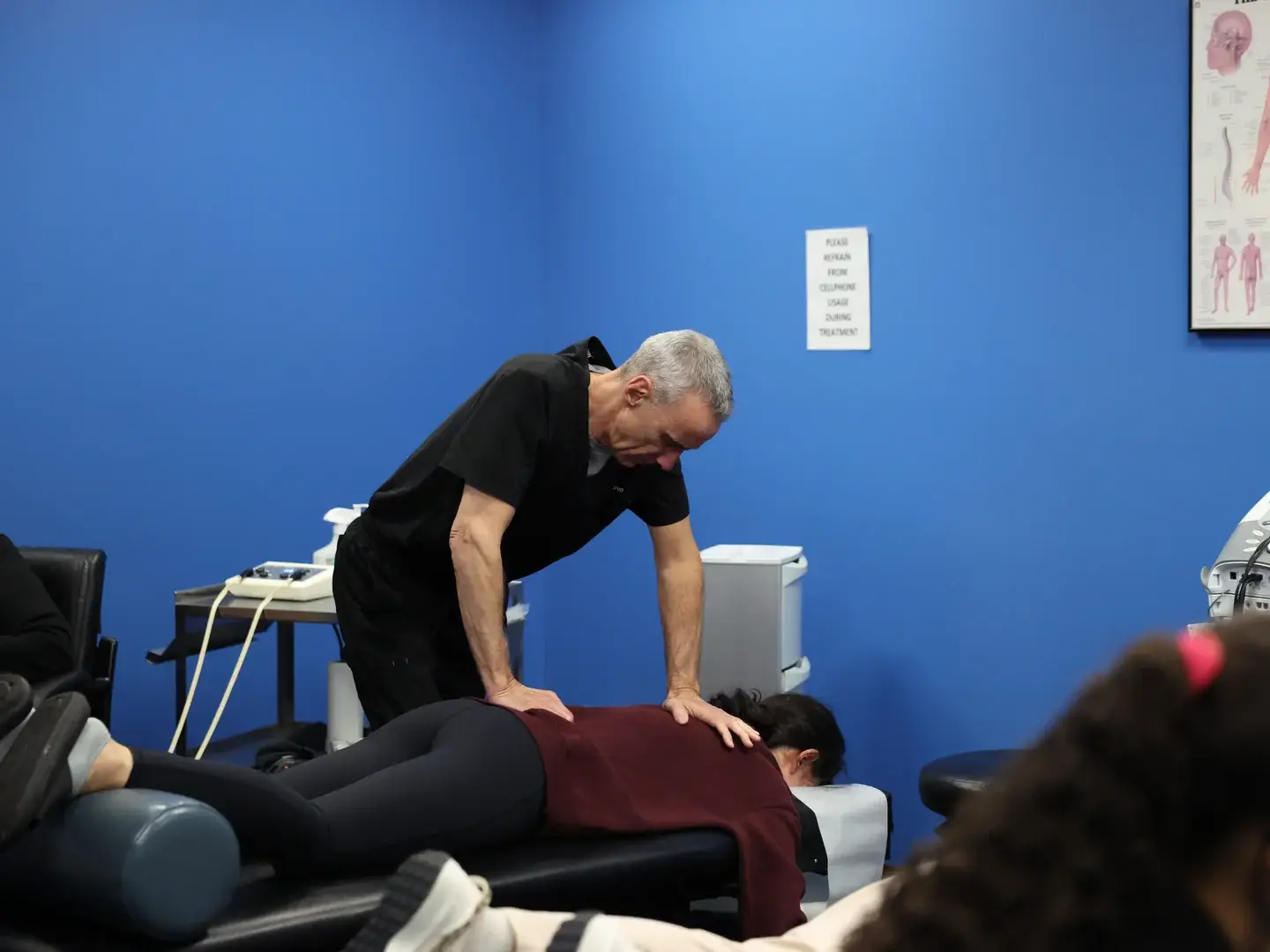
Chiropractic care at Physical Medicine & Rehabilitation of NY & CT (PMR) starts with a careful exam and a plain-language explanation of what’s behind your pain. Your chiropractor then uses hands-on treatment, targeted exercise and practical advice to help you move more easily. PMR chiropractors see patients at two offices, in Danbury, CT and Brewster, NY.
What is chiropractic care?
Doctors of chiropractic (DCs) diagnose and treat problems of the spine, joints and muscles, and the nerves around them. They’re licensed in both New York and Connecticut.
The treatment most people picture is spinal manipulation, also called a chiropractic adjustment: a quick, controlled push that moves a stiff joint a short distance. Chiropractors also use gentler joint mobilization, soft-tissue techniques, exercise and advice on posture and lifting. Care stays focused on muscle, joint and movement problems. If your symptoms point somewhere else, PMR coordinates with your physician or refers you to a specialist.
What chiropractic care at PMR includes
A full exam before treatment
Your chiropractor starts with your history: where it hurts, how it started, what makes it better or worse, and your overall health. The exam checks posture, joint motion, muscle strength, reflexes and sensation, plus orthopedic tests that stress specific structures. If the findings call for it, PMR offers X-rays and EMG nerve testing.
Adjustments and soft-tissue techniques
Options include spinal manipulation, joint mobilization and soft-tissue work on tight or irritated muscles, such as trigger point therapy. In Danbury, Dr. Joseph Delgiorno focuses on osseous (joint) and soft-tissue manipulative techniques. For some disc-related back and neck problems, PMR also offers spinal decompression on a DTS table.
Exercise and nutrition guidance
What you do between visits matters too. Dr. Craig Tilden in Danbury, who holds a B.S. in exercise science, focuses on personal exercise programs, nutritional counseling and musculoskeletal rehabilitation. Expect a few targeted exercises and practical advice on sitting, lifting and sleep positions.
A focus on sports and fitness
Dr. Paul Ciatto in Brewster has a special interest in the rehabilitation and strength training of athletes. Dr. Chris Shay, who sees patients in Brewster, NY, focuses on sports-related injuries and physical fitness. Athletes can then move into strength work in PMR’s on-site gym with trainers.
Care that connects with physical therapy and massage
Your plan may involve more than one PMR clinician. A chiropractor might restore motion in a stiff lower back while physical therapy builds the strength that supports it, and massage eases the muscle guarding that makes both harder. Acupuncture and physiatry are also available, and you can see every option on our services page.
Conditions chiropractors commonly treat
- Lower back pain, including strains from lifting or long hours of sitting
- Neck pain and stiffness, including pain after a car accident
- tension-type headaches and headaches that start in the neck
- sciatica and other leg pain that starts in the lower back
- mid-back pain, shoulder tension and sports strains
Spinal manipulation is one of the non-drug options clinical guidelines include for low back pain. Results vary, and your chiropractor will tell you what’s realistic for you.
Is chiropractic care safe?
For most people, chiropractic care carries a low risk of side effects. The most common are mild soreness, stiffness or tiredness in the treated area for a day or so. Serious complications are rare, such as worsening of a herniated disc or, very rarely, a certain type of stroke after neck manipulation.
PMR screens before treating, checking for warning signs and reviewing imaging when needed. You may get gentler techniques, or a referral, if you have:
- severe osteoporosis or a recent fracture
- numbness, tingling or weakness that is getting worse
- a known spinal tumor, infection or unstable spine
- a higher risk of stroke or a known problem with the arteries in your neck
What to expect at your first visit
After your history and exam, your chiropractor explains the findings in plain terms, outlines a plan with clear goals and may begin treatment that day if appropriate.
Insurance for chiropractic visits
PMR accepts many major plans, including Aetna, Anthem / Blue Cross Blue Shield, Cigna, ConnectiCare, Harvard Pilgrim, Oxford, UnitedHealthcare and the NYSHIP Empire Plan, plus auto accident, workers’ compensation and personal injury claims. PMR does not accept Medicare, Medicaid, HUSKY Health, Fidelis or Affinity. We submit claims for you and explain your benefits at your first appointment, and the billing office can answer questions at (203) 744-8014.
When to get urgent care
Chiropractic care isn’t emergency care. Call 911 or get to the nearest emergency room if you notice:
- sudden bladder or bowel control problems, or numbness in the groin or inner thighs
- sudden weakness in an arm or leg, or new trouble walking
- signs of stroke, such as a drooping face, slurred speech or a sudden severe headache
- back or neck pain with a high fever, or after a serious fall or crash
Frequently asked questions
Does a chiropractic adjustment hurt?
Most people feel pressure and a quick stretch rather than pain. An area that’s already sore may feel tender during treatment, and mild soreness for a day or so afterward is common. Tell your chiropractor if anything feels too strong. Gentler, low-force techniques are available, and you can always skip a technique you’re not comfortable with.
What is the popping sound during an adjustment?
The pop usually comes from gas bubbles releasing in the fluid inside a joint as the joint surfaces separate slightly, much like cracking your knuckles. It isn’t bones grinding or something slipping back into place. Not every adjustment makes a sound, and the sound doesn’t show whether treatment worked.
How many chiropractic visits will I need?
There’s no set number. It depends on the cause of your pain, how long you’ve had it, your health and your goals, and a recent strain often needs fewer visits than pain you’ve had for months. Your chiropractor reassesses at regular points by rechecking motion, strength and the activities that were hard. As you improve, visits usually space out and your home program takes over.
Can I see a chiropractor and a physical therapist at the same time?
Yes. At PMR, your chiropractor and physical therapist can work from the same plan. Chiropractic treatment often focuses on joint motion and pain relief, while physical therapy builds the strength and control that help improvements last. Insurance rules for same-day visits differ between plans, so our billing team can check yours.
Book a chiropractic appointment
With two offices across Connecticut and New York, there’s likely a PMR chiropractor near you. Call the office you prefer or request an appointment online.
- Dr. Tilden and Dr. Delgiorno at PMR of Danbury, CT: (203) 744-8013
- Dr. Ciatto and Dr. Shay at PMR of Brewster, NY: (845) 279-1135