
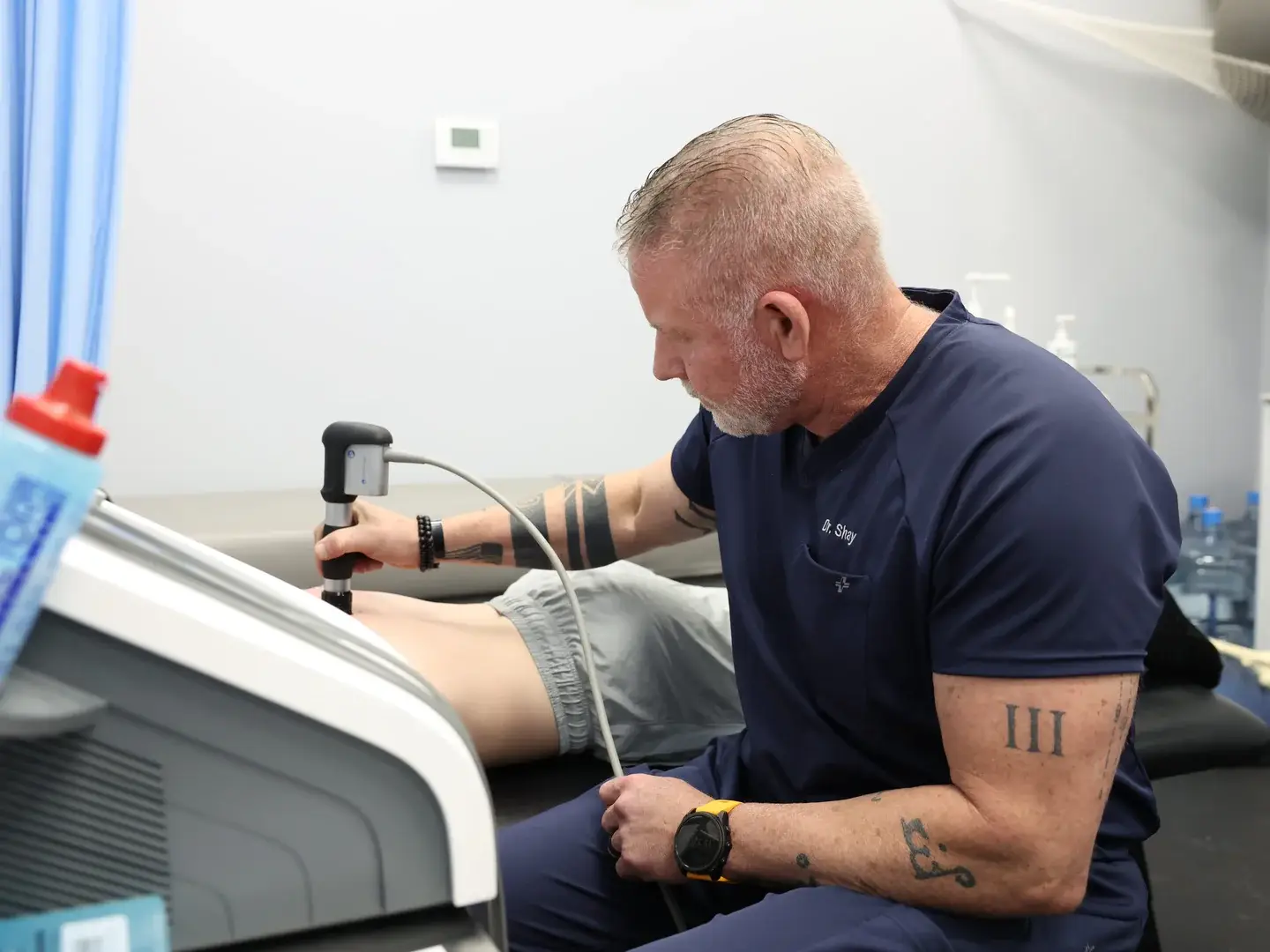
Some heel and tendon problems hang on for months, even after rest, ice, new shoes and stretching. At Physical Medicine & Rehabilitation of NY & CT (PMR), the shockwave therapy Danbury CT patients receive is a non-surgical type called radial pressure wave (RPW) therapy: quick pulses of pressure sent through the skin into a sore tendon. We offer it at 1 Padanaram Road as part of a plan that includes exercise.
How radial shockwave therapy works
A handheld applicator delivers rapid pulses of acoustic pressure to the painful area. Radial devices deliver the most energy right at the skin, and it disperses as it travels deeper, which suits tendons fairly close to the surface.
Researchers think these pulses may prompt a local healing response, increase blood flow, help break down calcium deposits in some tendons and calm pain signals. The exact mechanisms are still being studied. Our main shockwave therapy page compares radial and focused devices.
Conditions with the strongest research support
Shockwave therapy for tendonitis and heel pain is generally used once symptoms have lasted a few months. Research gives the most support for:
- Plantar fasciitis that hasn’t responded to standard care
- Achilles tendon pain and other long-standing tendonitis or tendinopathy
- Calcium deposits in a shoulder tendon (calcific tendinitis)
- Tennis elbow, where results are more mixed
Shockwave won’t remove a heel spur, though it may help the heel pain that often comes with one. Results vary, and some people don’t improve.
What to expect from shockwave therapy in Danbury, CT
Your clinician first examines the area and finds the most tender spots. After a gel is applied, the applicator is moved over the area with steady pressure. You’ll feel a fast tapping or thumping and hear a clicking sound. It can be uncomfortable over the sorest tissue, so the intensity is adjusted to what you can tolerate.
Treatment takes only a few minutes per area. Mild soreness or redness afterward is common and usually fades within a day or two; most people drive home and carry on with their day.
Your course of treatment
Shockwave therapy in Danbury, CT is given as a short series of sessions. Between visits, you’ll follow an exercise program, because gradually loading a tendon is central to recovery. Many people pair shockwave with physical therapy, chiropractic care, massage therapy or cold laser therapy at our Danbury office.
Who shouldn’t have shockwave?
Tell us if any of these apply, since shockwave may not be safe:
- Pregnancy
- A pacemaker or other implanted device near the area
- Blood-thinning medication or a bleeding disorder
- A tumor, infection or open wound at the treatment site
- Open growth plates in a child or teen
Cost and insurance
Many health plans don’t cover shockwave therapy, so it is often an out-of-pocket service. Our billing office at (203) 744-8014 can explain the cost before you start.
When to get urgent care
Get emergency care right away for:
- A sudden pop with sharp pain and trouble walking or using the limb, which can signal a tendon rupture
- Calf pain and swelling, or chest pain or trouble breathing that comes on suddenly
- A hot, red, swollen joint with a fever
Frequently asked questions
Does shockwave therapy hurt?
It can be uncomfortable, especially over the most irritated spot, but most people tolerate it well. The clinician starts at a lower intensity, raises it gradually and can pause whenever you ask. You may feel sore or tender for a day or two. Tell us if soreness lasts longer.
How soon could I notice a difference?
It varies. Some people notice a change during the series, while for others improvement builds over the weeks after it ends. Some people don’t improve much at all. We reassess at each visit, adjust your exercises, and talk about other options if shockwave isn’t helping.
Can I exercise after a session?
Usually, yes. Normal daily activity is fine right away. Your clinician may suggest easing off high-impact or heavy activity that stresses the treated tendon for a day or two before returning to your program. The goal is to keep the tendon moving and gradually loaded, not to rest it completely.
Book an appointment in Danbury
If heel or tendon pain keeps returning, an evaluation can show whether shockwave therapy in Danbury, CT is a reasonable next step.
- PMR of Danbury, CT: 1 Padanaram Road, Danbury, CT 06811
- Phone: (203) 744-8013