
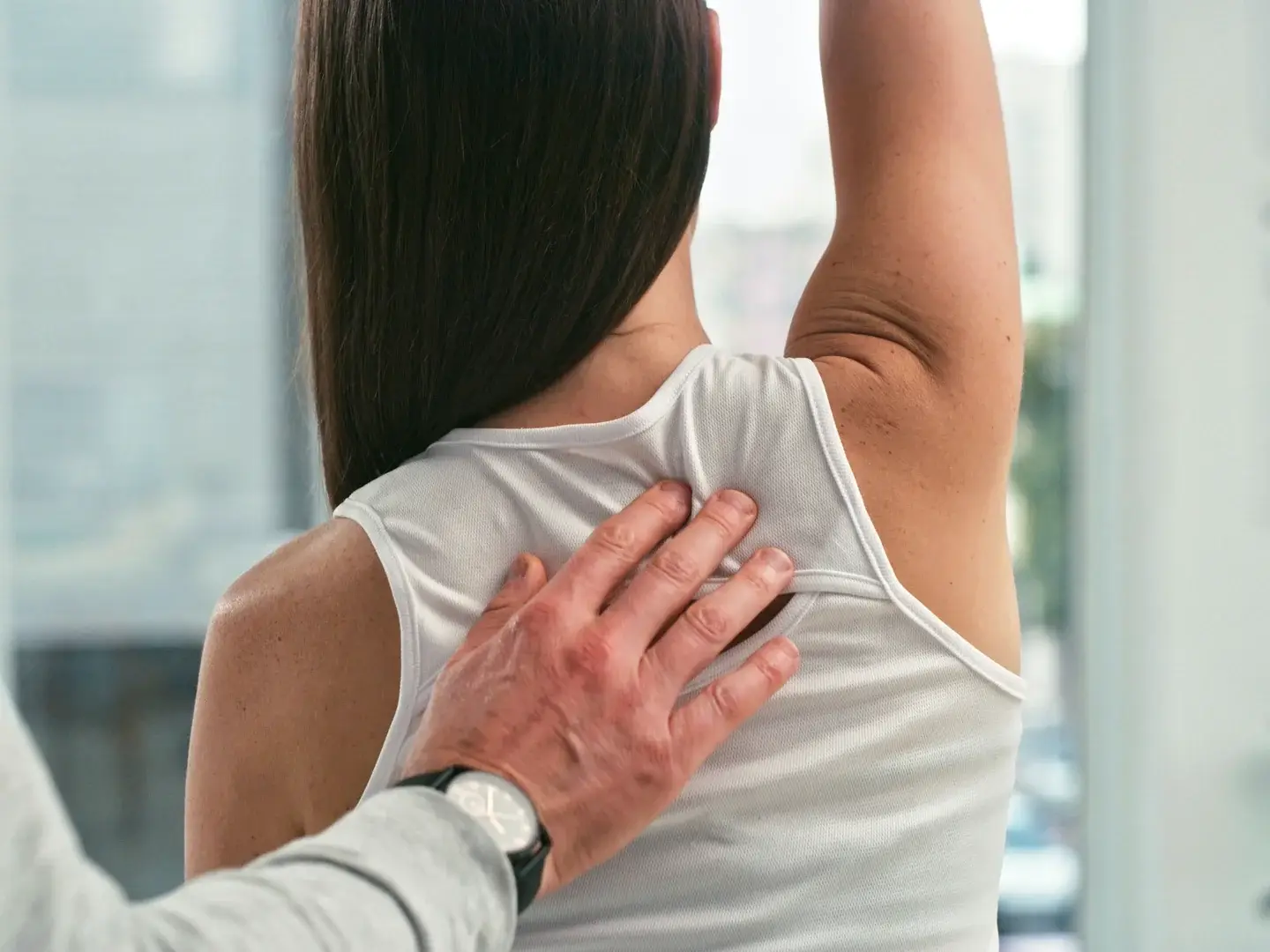
Scoliosis treatment at Physical Medicine & Rehabilitation of NY & CT (PMR) is about helping you feel and move better with the spine you have. To be clear from the start: chiropractic care and physical therapy do not straighten a structural curve. What they can do is ease back pain, loosen stiff areas and build strength for daily life and sports. Our teams in Brewster, NY, Danbury, CT work alongside the physician who monitors your curve.
What is scoliosis?
Scoliosis is a sideways curve of the spine, usually with some twisting. It’s diagnosed when a curve measures 10 degrees or more on an X-ray. The main types are:
- Idiopathic: the most common type, with no known cause, usually appearing during the growth spurt around puberty.
- Congenital or neuromuscular: caused by how the vertebrae formed before birth, or linked to conditions such as cerebral palsy.
- Degenerative: a curve that develops in adulthood as discs and joints wear unevenly.
Some curves are functional rather than structural. A leg-length difference or muscle spasm can make the spine bend temporarily, and that curve may lessen when the cause is addressed.
Signs and symptoms
In children and teens
- One shoulder or shoulder blade higher or more prominent
- An uneven waist, or one hip sitting higher
- A rib hump on one side when bending forward
Scoliosis in young people is usually painless, so significant back pain in a child or teen with scoliosis deserves a medical evaluation.
In adults
- Low back pain and stiffness, often worse after standing
- Muscle fatigue along the curve
- Leg pain, numbness or tingling if the curve narrows the space around nerves
- A change in posture or a loss of height
Scoliosis back pain in adults often comes from the discs and joints within the curve and can feel a lot like other lower back pain.
Who monitors the curve?
Children and teens with a curve that may still grow need regular monitoring by a pediatrician or orthopedic specialist, usually with periodic X-rays. Decisions about bracing or surgery belong with that physician, and scoliosis treatment at PMR works alongside their plan. Adults whose curve is changing or who develop nerve symptoms should also be followed by a physician, and PMR will refer you if your exam suggests that’s needed.
When to get urgent care with scoliosis
Seek emergency care, through 911 or the nearest ER, for:
- New incontinence, trouble urinating, or numbness in the groin or buttocks
- Leg weakness that is quickly getting worse, or sudden trouble walking
- Chest pain or sudden shortness of breath
- Severe back pain with a fever
Call your child’s doctor promptly for back pain that wakes them at night, or for shoulder or hip unevenness that seems to change over a few weeks.
What scoliosis treatment at PMR can and can’t do
PMR’s role is to manage symptoms and build capacity, not to reshape the spine. Depending on your age, curve and goals, care may include:
- Physical therapy: scoliosis physical therapy focuses on trunk endurance, rib cage and breathing mobility, hip flexibility and posture awareness. Ask about scoliosis-specific exercise methods.
- Chiropractic care: a scoliosis chiropractor can use gentle mobilization and soft-tissue work to ease stiffness and muscle tension around the curve. This may make you more comfortable, but it doesn’t change the curve itself.
- Massage therapy: can relax muscles that work overtime on one side of the spine.
- Strength training: supervised work in the on-site gym can build strength and endurance for sports, work and daily life.
Living well with scoliosis
- Keep moving. Walking, swimming and team sports keep muscles strong.
- Build endurance. Pair stretching with regular trunk and hip strengthening.
- Break up long positions, and use heat for tired back muscles at the end of the day.
Frequently asked questions
Can a chiropractor straighten scoliosis?
No. Chiropractic adjustments can’t straighten a structural curve, and good evidence doesn’t support claims that they do. What chiropractic care can do is ease stiffness and muscle tension around the curve so you move more comfortably. At PMR, it’s paired with exercise and coordinated with your physician.
Can adults get scoliosis?
Yes. Some adults have had a curve since adolescence, and others develop a new curve in later adulthood. Adult scoliosis is more likely than teen scoliosis to cause back pain, stiffness or leg symptoms. Exercise, hands-on care and activity changes can help many adults manage these symptoms, with a physician involved if nerves are affected.
Does a heavy backpack cause scoliosis?
No. Heavy backpacks, poor posture and sports don’t cause scoliosis. A heavy bag can still strain the back and shoulders, so using both straps and keeping loads manageable is sensible. If you notice uneven shoulders or hips in your child, ask your pediatrician about a scoliosis check rather than blaming the backpack.
Should my teen with scoliosis stop playing sports?
In most cases, no. Staying active supports strength and fitness, and most teens with scoliosis can keep playing their sports. If your teen wears a brace or has had surgery, follow their physician’s guidance on activity. PMR can help with conditioning and sports injuries along the way.
Talk with our team about scoliosis treatment
Whether you’re managing adult scoliosis or helping a teen stay strong for sports, call an office below or request an appointment.
- (845) 279-1135 for PMR’s Brewster, NY office
- (203) 744-8013 for PMR’s Danbury, CT office
Other spine and joint problems are listed on our conditions we treat page.