
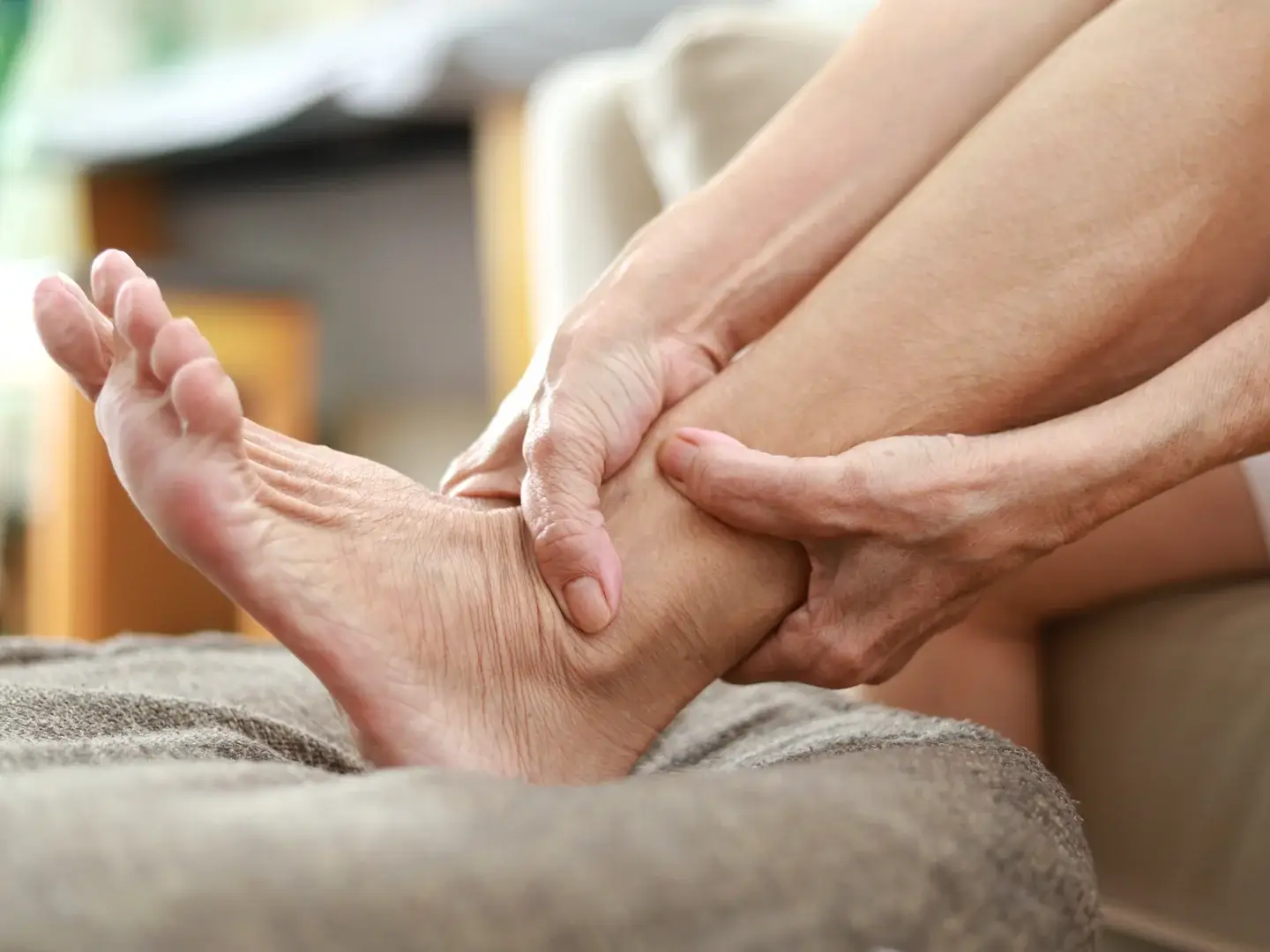
If your first steps out of bed feel like stepping on a stone, plantar fasciitis is a likely cause. It is the most common source of heel pain in adults and can be slow to settle. Plantar fasciitis treatment that combines the right exercises, better footwear and, for long-lasting cases, shockwave therapy can help many people get back to walking and running comfortably. Physical Medicine & Rehabilitation of NY & CT (PMR) treats heel pain in Danbury and Brewster, NY.
What is plantar fasciitis?
The plantar fascia is a thick band of tissue that runs from the heel bone to the toes and supports your arch. When it is loaded more than it can handle, the spot where it attaches to the heel becomes painful. Long-standing cases involve changes in the tissue more than ongoing inflammation, which is why strengthening matters more than rest alone.
Symptoms
- Sharp pain under the heel with your first steps in the morning or after sitting
- Pain that eases after a few minutes of walking, then returns after long periods on your feet
- A tender spot on the inner part of the bottom of the heel
- Pain that is worse barefoot on hard floors or on stairs
Causes and risk factors
Plantar fasciitis usually develops when the load on your feet rises faster than the tissue can adapt. It is most common in middle age, and contributors include:
- A sudden increase in walking, running or standing
- Tight calves or stiff ankles
- Flat feet, high arches, or worn-out shoes
- Long shifts on hard floors, or extra body weight
Heel spurs often show up on X-rays, but they are common in people without pain and are usually not the cause.
Is it plantar fasciitis or something else?
A heel stress fracture, an irritated nerve that causes burning or tingling, Achilles trouble or arthritis in several joints can feel similar, so the exam checks for them.
When to get urgent care for heel pain
Heel pain is rarely an emergency, but get same-day medical care, or go to the ER, if:
- Your heel started hurting after a fall or a jump from a height and you can’t bear weight
- The heel is red, hot or swollen, or you have a fever
- You have diabetes and notice a sore, wound or color change on your foot
- Numbness spreads through your foot, or your foot drags or slaps when you walk
Plantar fasciitis treatment, step by step
We start by pressing along the heel and arch, measuring calf flexibility and ankle motion, and checking your foot posture, walking pattern and shoes.
Stretching and loading
Calf and plantar fascia stretches before your first steps in the morning can take the edge off early pain. As symptoms allow, slow, heavy heel raises with the toes propped on a rolled towel help the tissue tolerate load again. Plantar fasciitis physical therapy adds hands-on work for the calf and foot.
Footwear and activity changes
Supportive shoes, no bare feet on hard floors, and trading some running or long walks for cycling or swimming reduce strain while the tissue recovers.
Taping, inserts and night splints
Taping, over-the-counter heel cups or arch supports, and night splints can ease pain for some people. If you need custom orthotics, we can point you to a podiatrist.
Shockwave for plantar fasciitis
For heel pain that has lasted several months despite consistent exercise, shockwave for plantar fasciitis may be added. It is delivered over a short series of visits while you keep up your exercises. Learn how shockwave therapy works, or read about shockwave therapy in Danbury, CT and shockwave therapy in Brewster, NY.
Recovery takes patience
Plantar fasciitis treatment is usually measured in months, not weeks, and many people improve within a year with steady conservative care. Consistency with your exercises and footwear changes matters more than any single step, and we adjust the plan if you plateau.
Self-care at home
- Stretch your calf and arch before getting out of bed
- Wear supportive shoes or sandals around the house
- Roll your arch over a frozen water bottle to ease soreness
- Break up long periods of standing
Frequently asked questions
Is shockwave therapy right for my plantar fasciitis?
It may be if your heel pain has lasted several months and hasn’t improved enough with exercise and footwear changes. Shockwave isn’t suitable for everyone, for example during pregnancy or for people with bleeding disorders or on blood thinners, so we screen you first. It works alongside your exercises as part of plantar fasciitis treatment, and results vary.
Do I need custom orthotics?
Not usually at first. Many people do well with supportive shoes and an over-the-counter insert or heel cup, combined with the right exercises. Custom orthotics may help people with unusual foot shapes or symptoms that don’t improve, and we can refer you to a podiatrist if that seems likely.
Can I keep running with plantar fasciitis?
Often, with changes. If pain is mild and settles quickly, you may keep running at lower volume, on softer surfaces and with fewer hills. If pain lingers into the next morning or keeps building, swap some runs for cycling or swimming. Your physical therapist can map out a gradual return.
Book a heel pain visit
Exercise-based heel pain treatment is available at both offices. Call or request a visit online, and see the conditions we treat for other foot and ankle problems.
- PMR of Danbury, CT, exercise care and shockwave: (203) 744-8013
- PMR of Brewster, NY, exercise care and shockwave: (845) 279-1135