
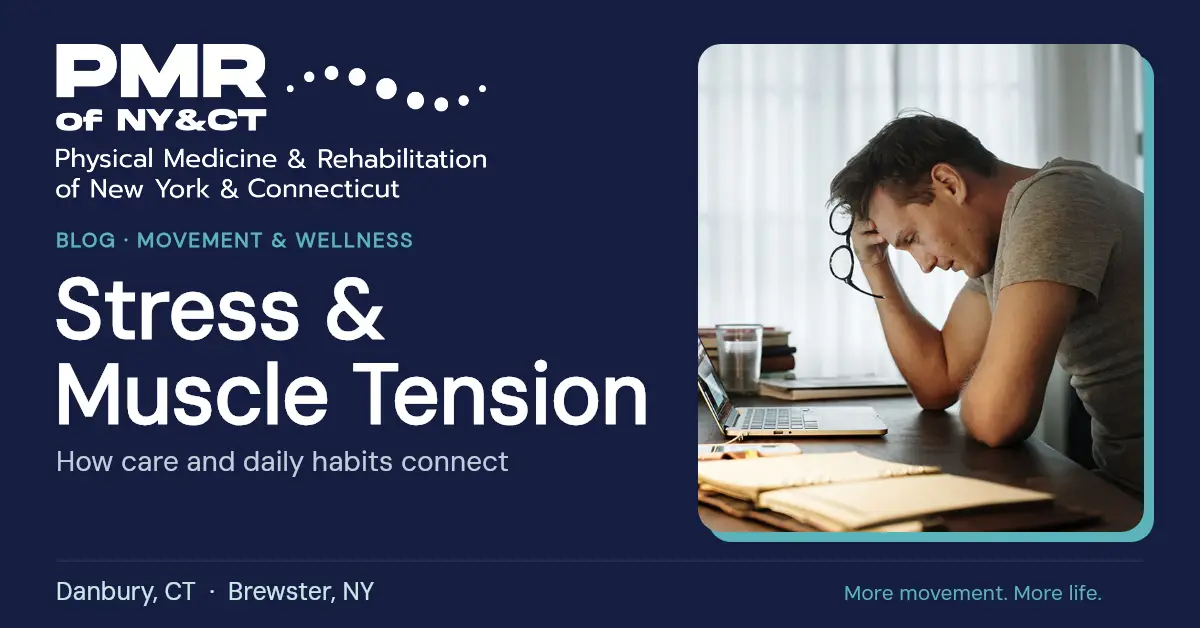
A looming deadline, a sick parent or a tense commute can leave more than your mind on edge. By evening your shoulders are creeping toward your ears, your jaw aches and your neck feels as tight as a rope. Stress and muscle tension often show up together, and each one can make the other harder to shake.
The physical side of stress can respond to physical care. Daily habits, relaxation skills and hands-on treatment such as chiropractic care and massage may ease the tightness, while you work on the sources of stress, with help from your doctor or a counselor if you need it.
Why stress and muscle tension go hand in hand
When your brain senses pressure or danger, it sets off the fight-or-flight response. Stress hormones surge, your pulse and breathing speed up, and your muscles tighten, ready to act. That reflex helps in a short burst but wears on you when pressure lasts for weeks.
During long stretches of stress, many people hold muscles partly contracted without noticing. Clenching your teeth, hunching toward a screen and breathing high in the chest keep the muscles of your jaw, neck and shoulders working, hour after hour. Those muscles tire and ache, the ache becomes one more thing to worry about, and the cycle continues.
Where stress tension tends to settle
For most people, a few areas take the brunt of it:
- Neck and shoulders. Neck and shoulder tension is the classic pattern, often with stiffness when you turn your head.
- Head. Tension headaches usually feel like a tight band or pressure across the forehead, temples or back of the head.
- Jaw. Clenching or grinding, especially at night, can leave the jaw and temples sore in the morning.
- Back. Sitting braced for hours can leave the muscles along the spine achy and fatigued.
Stress can also make existing pain feel worse, which may be why flares often line up with a hard week.
How chiropractic care and massage may help
Chiropractic care uses spinal manipulation, mobilization, stretching and exercise advice to improve how your spine moves. For some people with neck or back pain, it may ease stiffness and discomfort. Research on chiropractic care as a treatment for stress itself is limited, so think of it as care for the physical symptoms rather than a substitute for stress management.
Medical massage therapy works directly on tight, tender muscles. Many people find it calming, and some studies suggest massage may briefly ease feelings of stress. For stress and muscle tension, a combined plan makes sense: hands-on care to loosen things up, then habits that help relief last.
Your clinician will also look for other contributors, such as your desk setup. Our neck pain page explains how we evaluate a stiff, sore neck.
Easing stress and muscle tension at home
Small habits repeated through the day tend to work better than one big fix:
- Do a tension check. A few times a day, notice your jaw, shoulders and hands. Unclench your teeth, let your shoulders drop and loosen your grip.
- Stretch your neck and upper back. Gently tip one ear toward your shoulder and hold for 15 to 30 seconds per side. Then squeeze your shoulder blades back and down a few times. Stop if you feel numbness or tingling.
- Try progressive muscle relaxation. Tense one muscle group for about five seconds, then release it completely. Work from your feet up to your face.
- Break up long sitting. Stand, roll your shoulders and look away from the screen every 30 to 60 minutes.
- Add warmth and movement. A warm shower or heating pad can loosen tight muscles, and regular walking, swimming or yoga may ease tension and improve sleep.
When tension may signal something more serious
Tight muscles from stress are common, but some symptoms need urgent care. Call 911 for chest pain or pressure, shortness of breath, or pain spreading to the arm, jaw or back, which can signal a heart attack. Also call 911 for sudden weakness or numbness on one side, trouble speaking, or a sudden, severe headache. Get emergency care for a headache with fever and a stiff neck.
Stress that feels unmanageable deserves care too, and a counselor, therapist or your own doctor can help. If you are in crisis or thinking about suicide, call or text 988 (Suicide & Crisis Lifeline) or call 911.
Frequently asked questions
Can stress cause muscle pain all over the body?
It can contribute. Ongoing stress keeps many muscles slightly braced and can make your nervous system more sensitive to pain, so aches may feel widespread. Body-wide pain has other possible causes, though, including thyroid problems, infections, medication side effects and fibromyalgia. See a doctor if widespread aching persists for several weeks or comes with fatigue, fever or weight loss.
Can a chiropractor help with tension headaches?
Some people with tension headaches feel better with chiropractic care, particularly when neck stiffness is part of the picture. Research is mixed, and results vary from person to person. A good plan usually combines hands-on care with posture changes, stretching and stress management. A headache that is new, sudden or changing in pattern should be checked by a physician first.
Is my neck pain from stress or something else?
Clues that stress is involved include tightness that builds through the workday, eases on weekends or vacations, and shows up alongside jaw clenching or shallow breathing. Arthritis tends to flare with certain movements instead, and a pinched nerve may cause numbness or tingling in the arm. An exam can help sort out the cause, since many people have more than one.
Request an appointment at PMR
If tension in your neck, shoulders or back is wearing you down, the team at Physical Medicine & Rehabilitation of NY & CT (PMR) can help you find relief that fits your life. Learn more about our care for headaches and migraines, or request an appointment and our team will contact you to schedule your visit.