
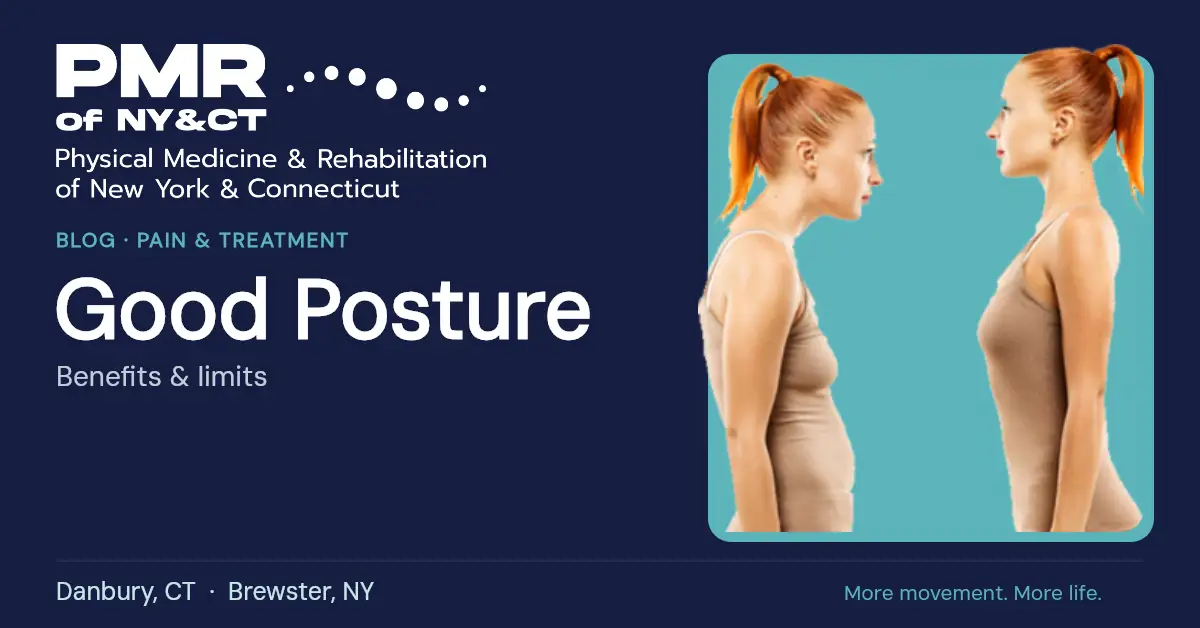
Most of us heard "stand up straight" growing up, usually without much explanation. As adults, posture tends to come up only when something aches, or when you catch your reflection mid-slouch. So what are the real benefits of good posture, and are they worth the effort?
Good posture can make long days more comfortable, give your lungs a little more room and help you stay steady on your feet as you age. It won't solve every ache, though, and there's no single perfect position to hold all day. Here's what posture can and can't do, and how to improve it.
What good posture really means
Good posture is less about standing like a soldier and more about balance. When you stand well, your ears sit roughly over your shoulders, your shoulders over your hips and your hips over your ankles. Your spine keeps its natural, gentle curves, and your muscles hold you up without straining.
Good posture is also flexible. No position stays comfortable for hours, and being able to sit tall, lean back, stand and shift is healthier than holding one ideal pose.
5 benefits of good posture
1. Less muscle fatigue during long tasks
When your head and trunk are stacked over your base of support, your muscles don't have to work as hard to keep you upright. Many people notice less end-of-day tightness in the neck, shoulders and back.
2. Room to breathe more fully
Slumping folds your chest and abdomen forward. Studies have found that people can move slightly more air when sitting upright than when slumped, which may make deep breathing easier during work or exercise.
3. Steadier balance as you age
In older adults, a pronounced forward rounding of the upper back is linked with slower walking, poorer balance and a higher risk of falls. Back-strengthening exercises may modestly improve that posture, and balance training can help you stay steady.
4. A possible lift in alertness and confidence
A few small studies suggest that sitting upright during a stressful task may help people feel more alert and self-assured than slumping. The research is mixed and the effects are modest.
5. Better control when you lift and exercise
The habits behind good posture, such as keeping your back in a neutral position and letting your hips and legs do the work, can help you lift, carry and train with control.
What posture can't do
Posture gets blamed for nearly every ache, but the evidence is more nuanced. Studies comparing people with and without back pain have found only weak links between pain and how someone sits or stands. Plenty of people with upright posture have back pain, and plenty of people who slouch don't.
So there's no need to worry each time you catch yourself slumping, and holding yourself rigidly upright all day can add tension of its own. Poor posture is one piece of the picture, along with strength, activity, sleep, stress and overall health.
How to improve posture without overthinking it
To get the benefits of good posture, small, steady habits work better than constant self-correction:
- Strengthen your upper back and hips. Band rows, bridges and similar exercises help you hold an upright posture with less effort.
- Stretch the areas that tighten with sitting. Gentle stretches for the chest and the front of the hips can ease the pull toward a slump.
- Use cues instead of willpower. Pick everyday moments, such as waiting at a red light or for the kettle, to check that you’re stacked and relaxed.
- Vary your positions. Alternate sitting, standing and walking through the day rather than staying put.
- Try activities that build body awareness. Yoga, Pilates and tai chi combine strength, flexibility and balance.
If stiffness, an old injury or pain makes these hard, physical therapy can target the specific muscles and joints holding you back.
When posture changes need a professional's look
Have a clinician take a look if you notice:
- A spine that seems to curve to one side, which can point to scoliosis
- A new or increasing stoop in the upper back, or a loss of height
- Pain, numbness or tingling that comes with a change in posture
- Sudden back pain after a minor fall, cough or lift, especially with osteoporosis, since it can signal a spinal fracture
Back pain with sudden leg weakness, numbness in the groin, or trouble controlling your bladder or bowels needs emergency care.
Frequently asked questions
Do posture correctors work?
Posture braces and wearable reminders may help some people notice when they slump, but research on them is limited and they don't build strength. Many clinicians suggest using one only for short periods, as a reminder, alongside exercises that strengthen your back and shoulders. If a brace causes pain, numbness or skin irritation, stop wearing it and check with your clinician.
How long does it take to improve your posture?
It depends on where you're starting and how consistent you are. Many people feel more comfortable within a few weeks of regular strengthening and stretching, while lasting changes in how you naturally sit and stand often take a few months. A few minutes of practice on most days tends to work better than long, occasional sessions.
Is it too late to improve posture as you get older?
No. Muscles respond to strength training at any age, and studies of exercise programs for older adults have found modest improvements in upper back posture and physical function. Some changes, such as those from arthritis or past fractures, may not fully reverse, but stronger muscles still make daily life easier. If you have osteoporosis, check with your doctor before starting.
Work on your posture with PMR
If you'd like a plan built for your body, Physical Medicine & Rehabilitation of NY & CT (PMR) can assess how you sit, stand and move, then teach you exercises that fit your routine. Request an appointment and our team will contact you to schedule a visit at one of our offices in Connecticut and New York.