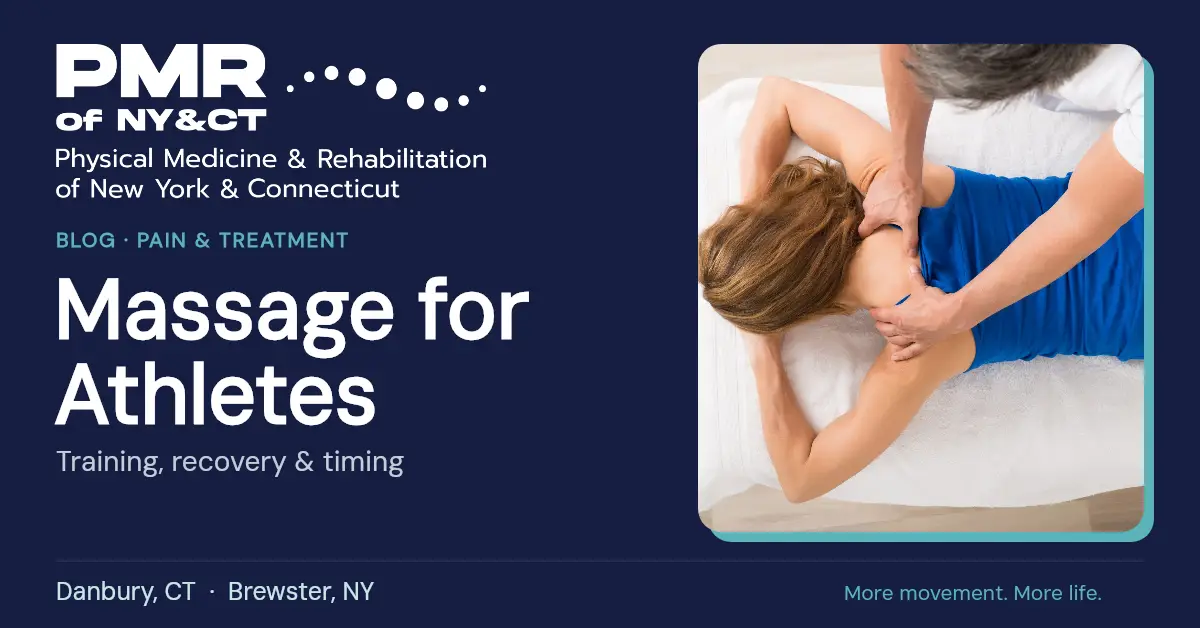
Hard training breaks your body down a little, and recovery is when it adapts and gets stronger. If you play a sport, run races or lift seriously, you've probably wondered whether regular massage deserves a place in that recovery.
Massage for athletes can help you feel less sore, more relaxed and more aware of how your body is handling your workload. It works best as one piece of a plan built on sleep, good fueling and smart training. It won't fix a structural injury or replace the strength work that keeps you durable.
What massage for athletes really offers
Here's a realistic picture. Massage may help you:
- Feel less sore and fatigued after demanding sessions
- Relax, which can make it easier to sleep well during heavy training blocks
- Gain a little short-term flexibility, especially when it's paired with mobility work
- Spot tight areas or left-right differences early
Massage hasn't been shown to:
- Reliably increase strength, sprint speed or jump height
- Speed the healing of a torn muscle, tendon or ligament
- Make up for poor sleep, under-fueling or a sudden jump in training load
Many athletes also value the mental side: a set time to slow down between hard days.
Timing massage around your training schedule
With massage for athletes, timing matters almost as much as technique. A few general rules help:
- Save deeper work for rest or easy days. Firm pressure can leave muscles tender for a day or two, so avoid it right before a key workout.
- Keep it light close to competition. In the final day or two before a big event, stick to short, gentle work you’ve had before. Race week isn’t the time to try a new technique or therapist.
- Let your body settle after a hard effort. Cool down, rehydrate and eat first. A gentle session can follow, with deeper work saved for a few days later.
- Use the off-season for problem areas. With less on the line, you can address long-standing tightness and work on range of motion.
There's no research-backed ideal frequency for massage therapy for athletes. The right rhythm depends on your sport, training load and how your body responds.
Massage during sports injury recovery
Massage can play a useful role in sports injury recovery, but timing and diagnosis come first. In the first few days after a strain or sprain, the injured area usually needs protection and relative rest, not deep pressure.
Once a clinician confirms what's going on, massage may ease guarding in the muscles around the injury and make rehab exercises more comfortable. After surgery, gentle work around a healed incision can be part of post-surgical rehab, once your surgeon clears it.
Massage does the most good alongside a graded return to sport. Strength, balance and sport-specific drills rebuild the capacity your body lost, and a sports medicine team can help you decide when you’re ready for full training.
Recovery habits that matter more than any massage
Massage for muscle recovery works best on top of solid basics:
- Sleep. The CDC recommends at least seven hours a night for adults, and many athletes do better with more.
- Fuel and fluids. Eat enough to match your training, including protein and carbohydrates, and replace the fluid you lose in sweat.
- Gradual load. Build mileage, weight or practice time step by step, with lighter weeks built in.
- Active recovery. Easy cycling, swimming or walking keeps blood moving without adding much stress.
- Strength and mobility work. These help your tissues handle the demands of your sport.
Signs an ache needs more than a massage
Some aches call for an evaluation, not more massage. Get checked by a sports medicine clinician if you notice:
- Pain in one specific spot on a bone that gets worse with running or jumping, a possible stress fracture
- A joint that swells, locks or gives way
- Numbness, pins and needles or weakness in a hand, arm or leg
- Pain that changes how you run, throw or swing, or that worsens week after week
After a hit to the head, stop playing for the day. See a healthcare provider the same day if you have a headache, dizziness, confusion or nausea, and return to sport only when they clear you. Call 911 for:
- A neck injury with numbness or weakness
- Loss of consciousness, a seizure, repeated vomiting, or a worsening headache or confusion after a head injury
- Collapse or chest pain during exercise
- Confusion with a very high body temperature in the heat
Frequently asked questions
Can massage help prevent sports injuries?
Evidence that massage on its own prevents injuries is limited. It may help indirectly, by easing tightness and helping you or your therapist notice a problem area early. The strongest protection comes from gradual increases in training, regular strength work, a good warm-up and enough rest. Think of massage as a support for those habits, not a replacement.
Is massage or foam rolling better for recovery?
Both may reduce soreness and leave you feeling ready to train again. Foam rolling is inexpensive and easy to do daily, while massage offers skilled, targeted work and feedback on what a therapist feels in your muscles. Many athletes use a foam roller most days and book massage around their hardest training blocks. Choose what you'll actually stick with.
Is massage safe for teen athletes?
Generally, yes, with a parent or guardian's consent. Pressure is usually lighter, and the focus is on recovery and body awareness. Ongoing pain in a growing athlete, especially at the knee, heel or elbow, should be evaluated rather than massaged away, since these areas are prone to overuse injuries near growth plates. The pediatrician is a good first call.
Keep your training on track
Physical Medicine & Rehabilitation of NY & CT (PMR) combines medical massage therapy with sports medicine, chiropractic care and physical therapy, so your recovery plan can change with your season. Request an appointment at PMR of Danbury or PMR of Brewster, and our team will contact you to schedule your visit.