
Published by PMR of NY & CT
Cutting carbs is a popular way to lose weight or bring down blood sugar. You probably know someone who swears by it, and someone else who found it left them tired and irritable.
Both experiences are real. Weighing low carb diet pros and cons honestly means looking at your health, your goals and the kind of low carb eating you have in mind. For some people, cutting carbs helps. For others, the side effects and restrictions outweigh the benefits.
What counts as a low carb diet?
There's no single definition. Some plans simply cut back on bread, pasta, sweets and sugary drinks. A ketogenic diet, or keto diet, goes much further, cutting carbs so low that the body burns more fat for fuel and makes compounds called ketones, a state known as ketosis.
Most low carb plans limit:
- Bread, pasta, rice, cereal and crackers
- Potatoes, corn and other starchy vegetables
- Sweets, desserts, sugary drinks and juice
- On stricter plans, most fruit and beans
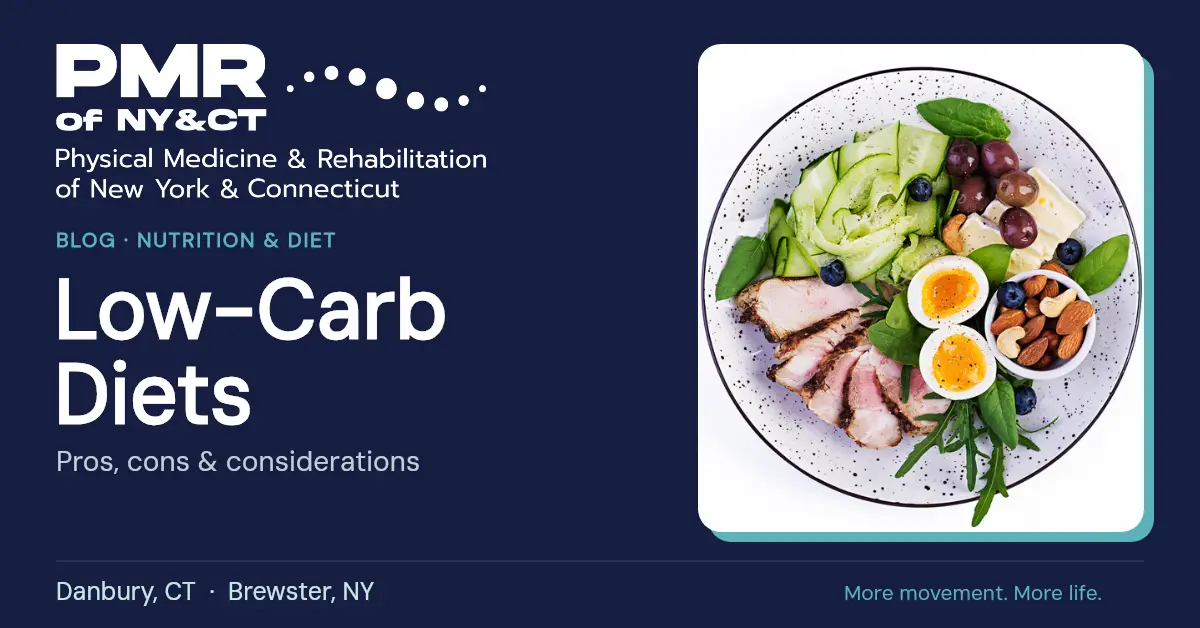
They lean instead on meat, fish, eggs, cheese, nuts, seeds, olive oil and nonstarchy vegetables such as leafy greens, zucchini and cauliflower.
The pros: possible benefits of cutting carbs
Weight loss without counting
Many people lose weight on a low carb diet without tracking calories, because meals built on protein, fat and vegetables tend to be filling and many sweets and snack foods drop out. Over the long term, results look similar to other ways of eating less. For people with knee pain or hip pain from arthritis, losing weight may ease strain on those joints.
Lower blood sugar
Carbohydrates raise blood sugar more than protein or fat do. Cutting carbs can improve blood sugar control in people with type 2 diabetes, at least in the short term, sometimes enough that medicines need adjusting. The American Diabetes Association recognizes reduced-carbohydrate eating as one option for adults with diabetes.
Better triglycerides and HDL
Low carb eating tends to lower triglycerides, a type of fat in the blood, and raise HDL, the protective form of cholesterol.
The cons: possible drawbacks and side effects
Early side effects
Headache, fatigue, dizziness, irritability and constipation are common low carb side effects in the first week or so, especially on keto. Many people call this the keto flu.
Less fiber and fewer nutrients
Cutting whole grains, beans and most fruit makes it harder to get enough fiber, potassium, magnesium and some B vitamins.
Higher LDL for some people
LDL cholesterol rises in some people, especially on plans heavy in butter, red meat and cheese. Ask your doctor whether to check your cholesterol before and after you start.
Hard to sustain
Strict rules can make restaurants, travel and family meals stressful, and lost weight often returns with old habits.
Tougher high-intensity workouts
Muscles rely on stored carbohydrate for sprints and other hard efforts, so intense training may feel tougher, at least at first. If you compete, plan any carb changes with a sports dietitian.
Why the type of low carb diet matters
A plan built on fish, poultry, eggs, nuts, olive oil and plenty of vegetables is very different from one built on bacon, sausage and butter.
Some large observational studies link long-term low carb eating that relies heavily on animal foods with a higher risk of early death, while low carb patterns that favor plant proteins and fats look more favorable. These studies can't prove cause and effect, but they suggest that what replaces the carbs matters as much as the carbs you cut.
Low carb diet pros and cons with a health condition
A medical condition or medicine can tip the low carb diet pros and cons. Get your doctor's input before cutting carbs if you:
- Use insulin or another diabetes medicine that can cause low blood sugar, since doses may need to change
- Take an SGLT2 inhibitor for diabetes, since very low carb eating raises the risk of a rare but serious complication called ketoacidosis
- Take blood pressure medicine, which may need adjusting
- Have kidney disease, where a nephrologist or renal dietitian should guide any change in protein
- Are pregnant or breastfeeding, or have had an eating disorder
Children and teens should follow a restricted diet only under a pediatrician's guidance. If you take diabetes medicine and eat very low carb, get medical care right away for nausea, vomiting or belly pain, which can signal ketoacidosis. Call 911 for confusion or fast, deep breathing.
Frequently asked questions
How long does the keto flu last?
For most people, symptoms ease within a week or two as the body adapts. Drinking enough fluids, cutting carbs gradually and going easy on hard workouts for the first several days may help. Call your doctor if symptoms are severe or don't improve, or if you take diabetes or blood pressure medicines.
Can you eat fruit on a low carb diet?
Usually, yes, in measured portions. Berries are lower in carbs than most fruit and rich in fiber, so many plans include them. Whole fruit beats juice or dried fruit, which pack more sugar into a small serving. Strict keto plans limit fruit the most, which is one reason fiber and vitamin C can run low.
How many carbs a day is considered low carb?
There's no official cutoff. In research, diets with less than about 130 grams of carbohydrate a day, or under roughly a quarter of daily calories, are often called low carb, while keto plans usually go down to about 20 to 50 grams. The right amount for you depends on your health, activity and medicines, so ask your doctor or a registered dietitian before setting a target.
Keep exercise on track with PMR
Whichever way you eat, regular movement supports your heart, blood sugar and muscles. If pain makes exercise hard, Physical Medicine & Rehabilitation of NY & CT (PMR) can help, and our physical therapy team can design a program that fits your goals. Leave the diet itself to your doctor or a dietitian. Request an appointment and our team will contact you.
More from the PMR Blog
Continue exploring articles in this topic category.