
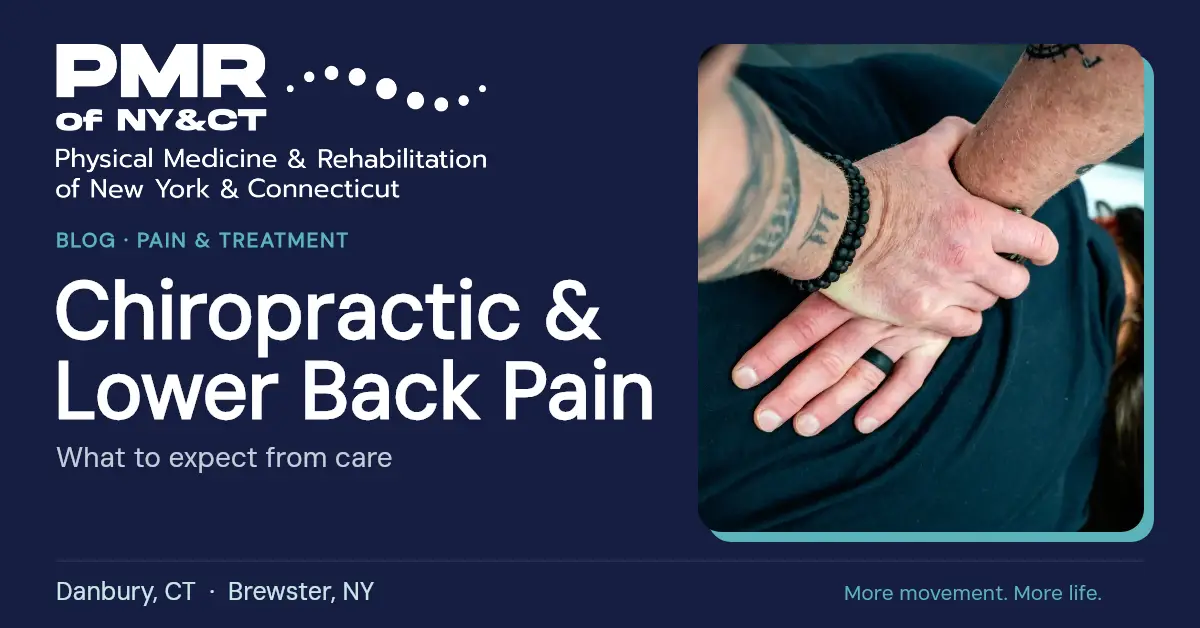
When your lower back seizes up after yard work or aches through every workday, you want to know which kind of care is worth your time. Can a chiropractor help lower back pain? For many people with common, mechanical back pain, it can: chiropractic care is one of several reasonable, drug-free options.
It isn't the right first stop for everyone, though. Some back pain needs a physician's evaluation, and results are usually best when hands-on care is paired with exercise and staying active. Here's what research says, what happens at a visit and how to tell whether chiropractic care fits your situation.
The evidence on chiropractic for low back pain
The main hands-on treatment chiropractors use is spinal manipulation, often called a chiropractic adjustment: a quick, controlled push that moves a stiff joint in the spine. Many also use mobilization, a gentler technique that moves a joint slowly through its range.
Guidelines from the American College of Physicians list spinal manipulation among the non-drug treatments to consider for low back pain, alongside options such as heat, massage, acupuncture and exercise. Studies suggest manipulation offers small to modest relief, roughly similar to other recommended treatments, and the benefit is mostly short term.
For most people asking "can a chiropractor help lower back pain?", the realistic answer is that it can ease pain and stiffness enough to help you move more. Staying active is what supports longer-term recovery.
Your first chiropractic visit
The first visit focuses on finding out what's driving your pain before treatment starts:
- History: how the pain began, what eases or worsens it, your work and activities, past injuries, health conditions and medicines
- Exam: how your back moves, where it’s tender, and a check of the nerves to your legs, including strength, reflexes and sensation
- Imaging when needed: most new low back pain doesn’t need a scan, but X-ray imaging may be used when your history or exam raises a specific concern
- A shared plan: your chiropractor explains what they found and the options, so you can decide together
Treatment often combines manipulation or mobilization with soft tissue work, exercises for your core and hips, and advice on lifting, sitting and sleep.
When can a chiropractor help lower back pain?
Chiropractic care tends to suit pain that is mechanical, meaning it changes with movement and position and there are no signs of a serious underlying problem. Examples include:
- Stiffness or strain after lifting, bending or a long drive
- A recurring ache that flares with long periods of sitting or standing
- Long-term low back pain, as part of an active exercise plan
- Some cases of sciatica, using gentle techniques and close monitoring, though evidence here is more limited
Manipulation isn't appropriate for everyone. A careful chiropractor for lower back pain screens for problems such as a suspected fracture, severe osteoporosis, infection, cancer or worsening nerve symptoms, refers you to a physician when needed, and can choose gentler techniques.
Serious complications from low back manipulation are very rare. Mild soreness or stiffness afterward is more common and usually fades within a day. Tell your chiropractor if you take blood thinners or have had spine surgery.
How chiropractic care fits with other treatment
Hands-on care works best alongside what you do between visits. Staying active, rather than resting in bed, helps most back pain recover, and exercise is one of the most consistently recommended treatments for long-term low back pain. A good plan builds in exercises and gradually hands more of the work to you.
At Physical Medicine & Rehabilitation of NY & CT (PMR), chiropractic care is coordinated with physical therapy, massage and physiatry, so your plan can change if your back isn’t responding. Our lower back pain page explains the full range of care we offer.
Symptoms that need a doctor before a chiropractor
See a physician promptly if back pain comes with:
- Fever, chills or feeling generally unwell
- A history of cancer, or weight loss you can't explain
- A hard fall, car crash or other significant injury
- Leg weakness or numbness that is getting worse
- Constant, severe pain, including at night
Call 911 or go to the emergency room for loss of bladder or bowel control, numbness in the groin, buttocks or inner thighs, or sudden weakness in both legs. These can signal cauda equina syndrome, a surgical emergency.
Frequently asked questions
Should I see a chiropractor or a physical therapist for back pain?
Both can help, and the better choice depends on your pain and preferences. Chiropractors tend to lean on hands-on care such as spinal manipulation, while physical therapists lean on exercise and movement retraining, though both use some of each. Many people do well with a combination, and at a practice where both work together, your plan can blend the two.
What is the popping sound during a back adjustment?
The pop comes from a quick change in pressure inside the fluid of a joint, which forms a small gas bubble, much like cracking your knuckles. It isn't a bone moving back into place, and it doesn't tell you how well the treatment worked. An adjustment can help even when there's no sound at all.
Do you need an X-ray before seeing a chiropractor?
Usually not. Guidelines advise against routine imaging for new low back pain without warning signs, because images rarely change treatment and often show age-related changes that aren't causing pain. An X-ray or MRI makes sense after significant trauma, with red-flag symptoms, or when pain isn't improving as expected. Your clinician should explain why they recommend one.
Find out if chiropractic care fits your back
If lower back pain is getting in the way of work, sleep or the activities you enjoy, PMR's chiropractors can examine your back, explain what they find and build a plan with you. Request an appointment and our team will contact you to set up a visit at PMR of Danbury or PMR of Brewster.