
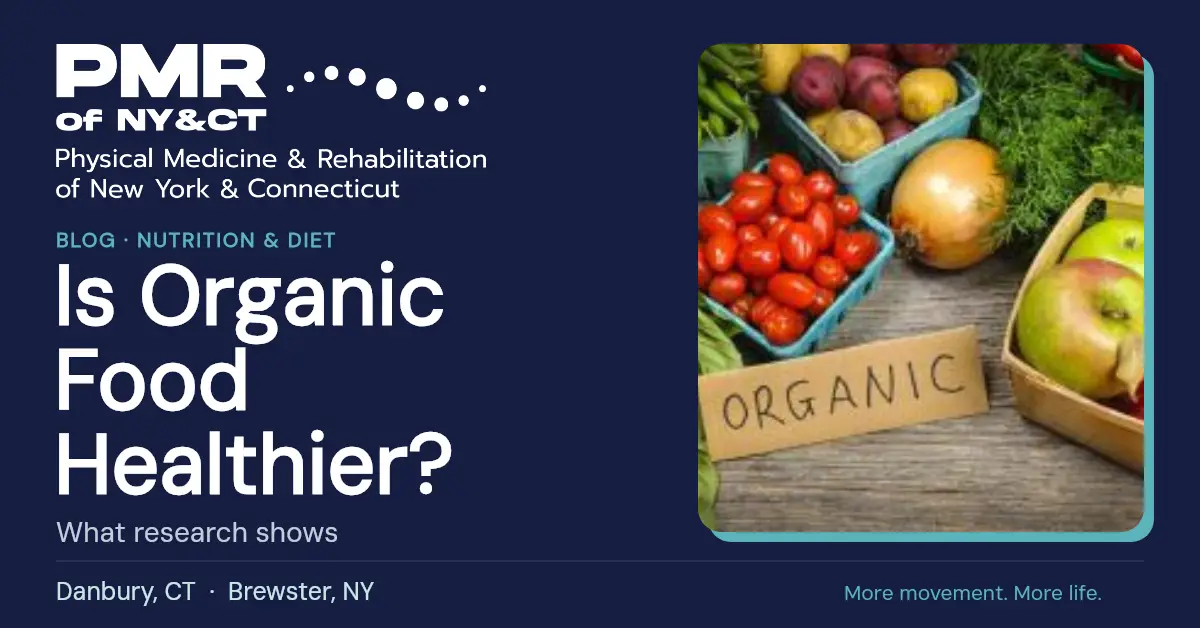
You're in the produce aisle holding two bags of apples, one organic and one not, and the organic bag costs noticeably more. Is organic food healthier, or are you mostly paying for the label?
It depends on what you mean by healthier. Studies comparing organic vs conventional food find similar amounts of most vitamins and minerals. Organic food reliably carries less synthetic pesticide residue, and organic livestock are raised without antibiotics or added hormones. What research hasn't shown is that eating organic leads to better long-term health.
Here's a closer look at the evidence, so you can decide where organic is worth it for you.
Nutrients: mostly the same, with a few differences
Large research reviews have compared organic and conventionally grown foods. For most vitamins and minerals, the two come out about even.
A few differences do show up. Some reviews have found higher levels of certain antioxidants, such as polyphenols, in organic crops, and more omega-3 fats in organic meat and dairy, which may reflect more grazing in the animals' diets. Nutrient levels also shift with crop variety, soil, weather, ripeness at harvest and time in storage.
Whether these differences add up to better health isn't clear. A serving of conventional spinach or blueberries still delivers the nutrients and fiber those foods are known for.
Pesticide residue: the clearest difference
Organic farmers can't use most synthetic pesticides. They may use certain approved substances, most from natural sources, so organic doesn't mean pesticide-free. Still, testing consistently finds less residue on organic produce, and studies show that people who switch to a mostly organic diet have lower levels of some pesticides in their urine within days.
For conventional food, the Environmental Protection Agency sets legal limits on residues, and federal testing finds that the vast majority of samples fall below them. Whether long-term, low-level exposure through food affects health is still being studied.
Antibiotics, hormones and resistant bacteria
Organic standards don't allow antibiotics or added growth hormones in livestock. If an organic animal gets sick, the farmer must still treat it, but its meat or milk can no longer be sold as organic.
Conventional meat and milk are regulated too. After an animal receives antibiotics, federal rules require a waiting period before its meat or milk can be sold, and milk is routinely tested for antibiotic residues.
The larger concern is antibiotic resistance. The CDC notes that drug-resistant bacteria can spread from animals to people, including through food, and that more careful antibiotic use in food animals helps slow that spread. Some studies have found organic meat less likely to carry antibiotic-resistant bacteria.
On hormones, labels can mislead. Federal rules don't allow added hormones in raising pork or poultry, organic or not, so "no hormones added" on chicken or pork applies to every package. Conventional beef cattle may receive FDA-approved hormones, and the FDA considers that meat safe to eat.
Organic food and food safety
When it comes to germs, neither organic nor conventional food has a clear safety edge. Either can carry bacteria such as Salmonella or E. coli, and organic farms that fertilize with manure must follow rules on how and when it's applied.
The same kitchen habits protect you either way: rinse produce, keep raw meat away from ready-to-eat foods, cook meat to a safe temperature and refrigerate leftovers within two hours.
So, is organic food healthier?
Putting the evidence together:
- Nutrition: Mostly similar, with modestly higher levels of some antioxidants and omega-3 fats in certain organic foods
- Pesticide residue: Lower in organic food
- Antibiotics and hormones: Not used in organic livestock
- Germs: No clear difference, so handle all food with care
- Long-term health: Not proven better
Organic is a reasonable choice if it fits your budget and values, especially if lowering pesticide exposure or limiting antibiotic use in farming matters to you. If it doesn't fit your budget, conventional fruits and vegetables are still an excellent choice. Eating plenty of produce, whole grains and beans does far more for your health than the label on them.
Frequently asked questions
Is organic food healthier for kids?
Children may be more sensitive to pesticides because their bodies are still developing and they eat more food for their size. The American Academy of Pediatrics has noted that organic diets lower pesticide exposure, but that there isn't strong evidence of better health as a result. The bigger goal is helping kids eat a variety of fruits and vegetables. Bring specific questions to your pediatrician.
Does eating organic lower your cancer risk?
A few large observational studies have linked eating organic food often with lower rates of certain cancers, while others have found no clear difference. People who buy organic also tend to smoke less, exercise more and eat more produce, so these studies can't prove cause and effect. Steps with stronger evidence include not smoking, limiting alcohol, staying active and getting recommended cancer screenings.
Why is organic food more expensive?
Organic farming often takes more labor, such as controlling weeds by hand or machine instead of with herbicides, and yields can be lower. Organic livestock need organic feed and outdoor access, which cost more, and farms pay for certification and record-keeping. Organic supply chains are also smaller. The price gap varies widely by food, store and season.
Pair good food with regular movement
A registered dietitian is the best source of personal nutrition advice, and regular movement matters for your health too. If pain or an injury is making it hard to move, Physical Medicine & Rehabilitation of NY & CT (PMR) offers physical therapy and chiropractic care. Request an appointment and our team will contact you to schedule a visit.