
Published by PMR of NY & CT
Living with fibromyalgia often means looking for anything that takes the edge off widespread aching, fatigue and restless sleep. Whole-body cryotherapy, where you stand in a chamber of extremely cold air for a few minutes, gets a lot of attention online, and you may be wondering if it is worth a try.
Here is the honest answer. Research on cryotherapy for fibromyalgia is limited. A handful of small studies suggest it may ease pain or improve well-being for a short time, but it is not a proven treatment and it isn't safe for everyone. If you try it, think of it as an optional add-on to a broader plan, not the plan itself.
What cryotherapy involves
Cryotherapy simply means treatment with cold. It comes in a few forms:
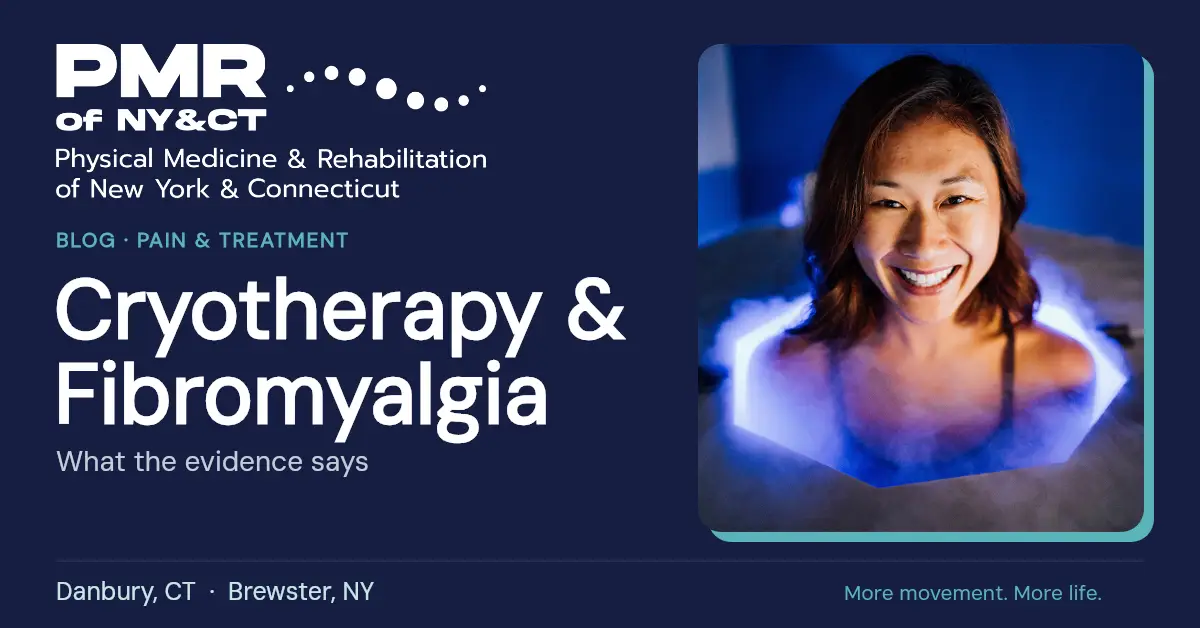
- Whole-body cryotherapy: you stand in an enclosed chamber cooled below minus 100 degrees Celsius (about minus 150 degrees Fahrenheit) for two to three minutes, wearing gloves, socks and ear protection.
- Partial-body cryotherapy: a similar cabin that leaves your head outside, often cooled with liquid nitrogen vapor.
- Local cold therapy: an ice pack, cold gel pack or cool water on one sore area, the version most people already have at home.
The idea is that intense cold may briefly dampen pain signals and leave you feeling more alert. How much that helps fibromyalgia, a condition linked to how the nervous system processes pain, is still an open question.
What research says about cryotherapy for fibromyalgia
The studies so far are small, short and hard to blind, since everyone knows whether they stepped into a freezing chamber. Some have reported less pain or better quality of life after a series of sessions. Few followed people for long, so it isn't clear how long any benefit lasts, and few compare cryotherapy with proven approaches such as exercise.
Cryotherapy is not among the core treatments, such as exercise and education, that expert guidelines emphasize for fibromyalgia. In a 2016 consumer warning, the US Food and Drug Administration said it had not cleared or approved any whole-body cryotherapy device to treat medical conditions. It also listed risks including frostbite, burns, eye injury and, in chambers cooled with liquid nitrogen, oxygen levels low enough to make someone pass out.
Who should skip it or ask a doctor first
Before trying cryotherapy for fibromyalgia, talk with your physician. Extra caution applies, and your doctor may advise against it, if you have:
- Heart disease, uncontrolled high blood pressure, or a past heart attack or stroke
- Raynaud's phenomenon, cold allergy or other cold sensitivity
- Poor circulation, or nerve damage that dulls your sense of cold
- Asthma or another lung condition that flares with cold air
- Pregnancy
- Open wounds or skin infections
Also worth knowing: many people with fibromyalgia find that cold makes their pain and stiffness worse. If cold usually bothers you, that is a useful clue. A simple cold pack on one sore spot for 10 to 15 minutes, with a thin towel against your skin, is a low-risk way to see how your body responds.
What helps fibromyalgia most consistently
The strongest evidence supports regular, gradual exercise. Walking, cycling, water exercise, strength training and gentle movement such as tai chi or yoga can improve pain, fatigue and daily function for many people. The key is to start low and build slowly.
A good fibromyalgia treatment plan often also includes:
- Steady sleep habits and stress management
- A paced exercise program from a physical therapist
- Hands-on care such as medical massage, which may ease muscle tension for some people, although research on massage for fibromyalgia is limited and mixed
- Medicine from your physician, or counseling approaches such as cognitive behavioral therapy
Our fibromyalgia care page explains how these pieces can fit together.
Red flags with fibromyalgia and cold exposure
Fever, visibly swollen joints, unexplained weight loss and true muscle weakness aren't fibromyalgia symptoms, so any of those deserves a medical workup. After cold exposure, watch for skin that turns white or gray, blisters or stays numb, which can signal frostbite. Call 911 for chest pain, trouble breathing or fainting.
Fibromyalgia often travels with depression and anxiety. If you are in crisis or thinking about suicide, call or text 988 (Suicide & Crisis Lifeline) or call 911.
Frequently asked questions
How is fibromyalgia diagnosed?
There is no single blood test or scan for it. A physician makes the diagnosis from your history and exam: widespread pain lasting at least three months, often with fatigue, unrefreshing sleep and trouble with memory or focus. Blood tests are often used to rule out conditions that can look similar, such as thyroid disease or inflammatory arthritis.
Does cold weather make fibromyalgia worse?
Many people with fibromyalgia say cold, damp weather brings more pain and stiffness, although research on weather and pain has produced mixed results. Your own pattern is what matters. If cold days are harder, dress in layers, warm up indoors before activity and keep moving gently rather than staying still for long periods.
Is cryotherapy the same as cold laser therapy?
No. Cryotherapy cools the body or a body part. Cold laser therapy, also called low-level laser therapy, uses low-power light that doesn’t noticeably heat or chill tissue; the word cold refers to that lack of heat. Some small studies suggest it may ease pain in certain conditions, but evidence for fibromyalgia is limited.
More from the PMR Blog
Continue exploring articles in this topic category.