
Published by PMR of NY & CT
Should you hold a stretch or keep moving? If you live with joint or muscle pain, or you simply want to feel less stiff, stretching advice can sound contradictory. Both have a place, and choosing between them is simpler than it seems.
The core difference in static vs dynamic stretching is movement. Static stretching means easing a muscle into a lengthened position and holding it still. Dynamic stretching means moving a joint through its range again and again with control. Which one you use depends mostly on timing and your goal.
What static stretching does
Static stretching is the kind most people picture: you settle into a position until you feel mild tension, then hold it while breathing slowly. Done regularly, it is a well-established way to improve flexibility over time. It also feels good after activity or a long day at a desk.
A few familiar static stretches:
- Standing calf stretch: hands on a wall, one foot stepped back, back heel pressed down as you lean in
- Doorway chest stretch: elbows at or below shoulder height and forearms on the frame, stepping forward until your chest feels a gentle stretch
- Standing quad stretch: one ankle held behind you, knees side by side, a hand on a chair for balance
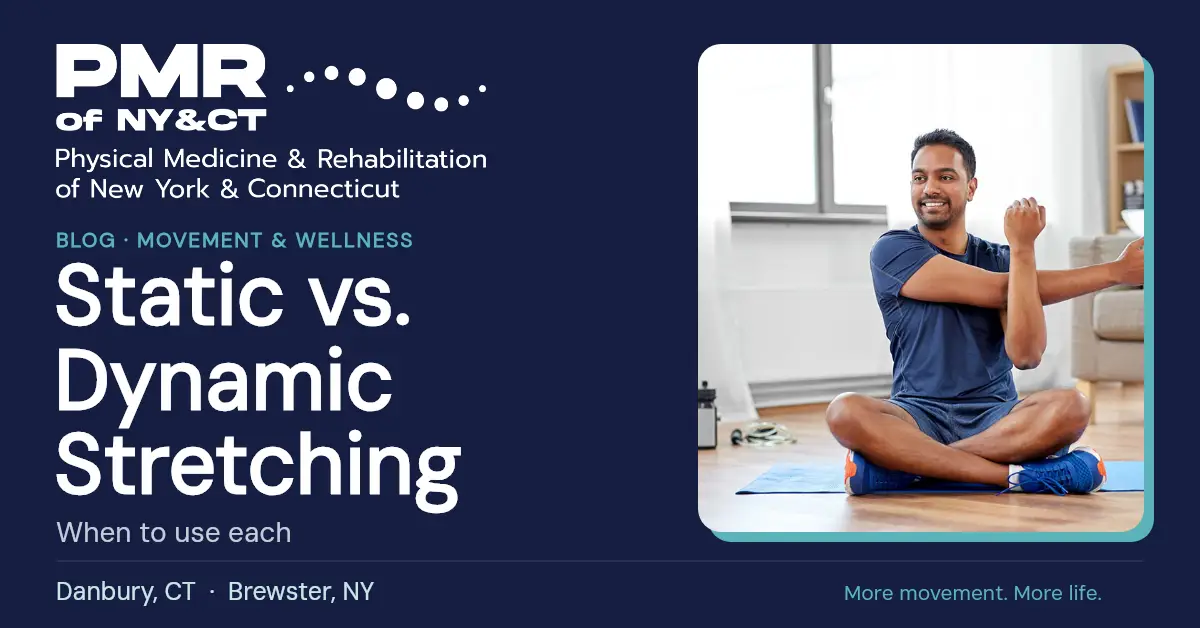
- Cross-body shoulder stretch: one straight arm drawn across your chest with the other hand
The American College of Sports Medicine suggests holding each stretch for 10 to 30 seconds and repeating it two to four times. Older adults may get more from holds of 30 to 60 seconds.
What dynamic stretching does
Dynamic stretching uses controlled, rhythmic movement instead of holds. Each repetition takes a joint a little further through its range, warming the muscles and preparing them for the activity ahead.
Common examples:
- Leg swings: one hand on a wall, swinging one leg forward and back as the arc gradually grows
- Arm circles: small circles that slowly get larger, forward and then backward
- Inchworm walkouts: knees bent as needed, hands to the floor, walking out to a plank and then back
- Walking lunges with a twist: a forward lunge with your upper body turning toward the front knee
Aim for 8 to 12 smooth repetitions of each. Control matters more than speed. If you have back pain, osteoporosis or shaky balance, start with the first two and ask your clinician before adding the others.
Static vs dynamic stretching at a glance
- Movement: static holds still; dynamic keeps moving
- Best timing: dynamic before activity; static after activity or as its own session
- Main purpose: static builds flexibility over weeks; dynamic prepares your body to move now
- Common mistake: forcing a static hold into pain, or letting dynamic moves get fast and sloppy
Neither type is better overall. Most well-rounded routines use both, at different moments.
Which type of stretching fits your goal
Rather than treating static vs dynamic stretching as a contest, ask what you want the stretch to do:
- Getting ready for a workout or sport: a few minutes of light activity, then dynamic moves
- Cooling down: static holds for the muscles you just used
- Loosening a stubborn tight spot: short static sessions on most days
- Easing morning or desk stiffness: gentle dynamic movement, like slow arm circles or a short walk
- Recovering from an injury: the specific stretches your clinician recommends, at their pace
Stretching safely with joint or muscle pain
If you're seeing a chiropractor or physical therapist for back, neck or joint pain, stretching can support your care, but the right mix of static vs dynamic stretching depends on your condition. A stretch that eases one person’s back can irritate another’s.
A few ground rules:
- Stretch to mild tension, never sharp pain
- Ease off if a stretch sends tingling or numbness into an arm or leg
- Skip hard stretching of a freshly strained muscle for the first few days
- If your joints are naturally very flexible, strengthening may help more than extra stretching
Our chiropractic care and physical therapy teams can show you which stretches suit your body and how far to take them.
When stretching isn't the answer
Stop stretching and get checked promptly if pain follows a fall or accident, comes with fever or brings new weakness in an arm or leg. Back pain with numbness in the groin or inner thighs, or sudden difficulty controlling your bladder or bowels, is an emergency: call 911.
Frequently asked questions
Is yoga static or dynamic stretching?
Yoga includes both. Holding a pose such as downward dog for several breaths is mostly static stretching, though many poses also build strength and balance. Flowing sequences, like moving through sun salutations, keep you in motion, which is closer to dynamic stretching. If you have back or joint pain, choose a gentle or beginner class, tell the instructor about your condition and skip poses that hurt.
Is ballistic stretching the same as dynamic stretching?
No. Both involve movement, but dynamic stretching stays controlled and within a comfortable range, while ballistic stretching uses bouncing or momentum to push past it. Some athletes use ballistic drills under coaching for specific sports. For most people, especially anyone managing joint or muscle pain, the momentum adds strain risk, so controlled dynamic movement is the safer choice.
How often should you stretch to get more flexible?
Consistency matters more than intensity. Stretching two or three days a week can help, and stretching daily tends to bring faster gains. Flexibility usually improves gradually over several weeks and fades if you stop, so a short routine you will actually keep is worth more than an occasional long session.
Get stretching guidance from our team
If stiffness or pain keeps getting in your way, Physical Medicine & Rehabilitation of NY & CT (PMR) can help you build a stretching routine that fits your body and goals. Request an appointment and our team will contact you to schedule a visit at PMR of Danbury or PMR of Brewster.
More from the PMR Blog
Continue exploring articles in this topic category.