
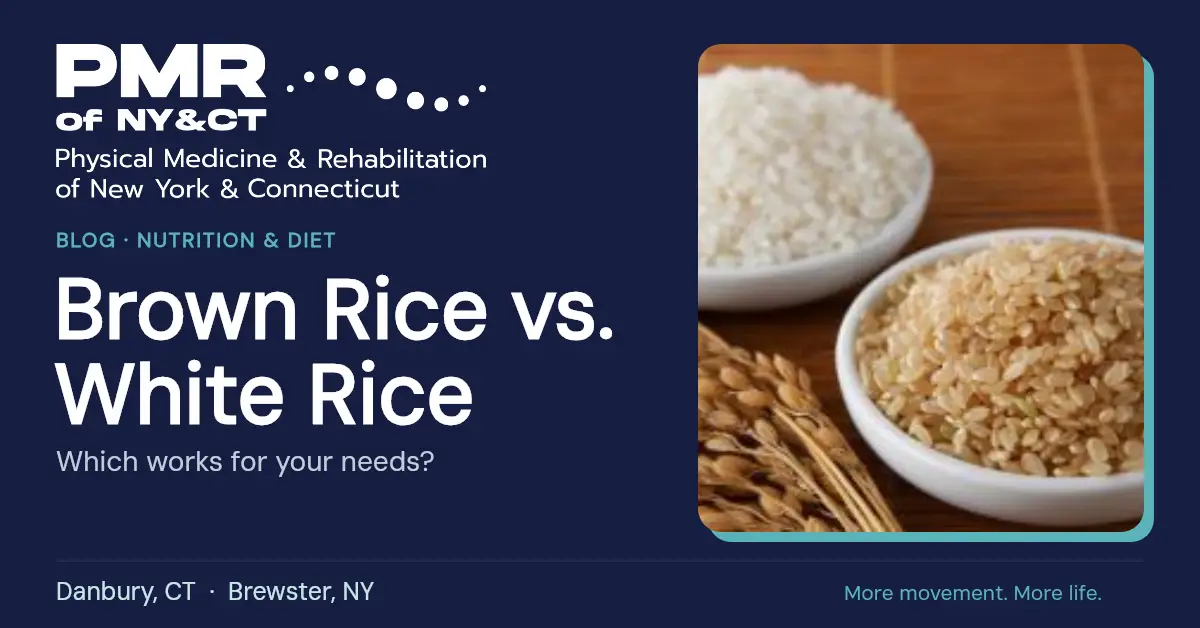
Standing in the rice aisle, it's easy to assume brown is always the healthy pick and white is a guilty pleasure. The real brown rice vs white rice story is more balanced than that. Both can fit in a healthy diet, and the better choice depends on your health, your goals and what else is on your plate.
In short, brown rice is a whole grain with more fiber and minerals. White rice is easier to digest, cooks faster and contains less arsenic, and enriched white rice has some nutrients added after milling. Here is how they compare.
What makes rice brown or white
Each grain of rice has three edible parts: the bran, a fiber-rich outer layer; the germ, a small nutrient-rich part that can sprout; and the endosperm, the starchy center. Brown rice keeps all three, which is what makes it a whole grain. White rice is milled to remove the bran and germ, leaving mostly the starchy center.
White rice also cooks faster and keeps longer. The bran slows cooking, and natural oils in the bran and germ can turn rancid within months.
Brown rice vs white rice: nutrition side by side
Per serving, the main differences are:
- Fiber: Brown rice has several times more fiber than white rice, which helps you feel full and keeps digestion regular.
- Minerals: Brown rice provides more magnesium, manganese and phosphorus.
- Protein and calories: The two are similar.
- B vitamins and iron: White rice sold in the United States is often enriched, meaning iron and B vitamins, including folic acid, are added after milling. Enriched white rice has much more folate than brown rice.
- Phytate: The bran in brown rice contains phytic acid, which can reduce how much iron and zinc you absorb from that meal. In a varied diet, this rarely matters.
So is brown rice healthier? On balance it comes out ahead on nutrition, but enriched white rice closes more of the gap than many people expect.
How each one affects blood sugar
White rice tends to raise blood sugar a bit faster and higher than brown rice, whose fiber slows digestion somewhat. Both are starchy foods, though, and the gap between them is modest.
Large observational studies have linked eating a lot of white rice with a higher risk of type 2 diabetes, and replacing some of it with brown rice or other whole grains with a lower risk. These studies show an association, not proof, and how much you eat matters as much as which kind.
To soften the effect of either kind:
- Keep rice to about a quarter of your plate.
- Pair it with vegetables and a protein food.
- Try basmati or parboiled rice, which tend to raise blood sugar more slowly than short-grain or sticky rice.
If you have diabetes or prediabetes, ask your diabetes care team or a registered dietitian how rice fits your meals.
What to know about arsenic in rice
Rice absorbs more arsenic from soil and water than many other crops. Because arsenic collects in the outer layers of the grain, brown rice usually contains more than white rice. Adults can still enjoy rice as part of a varied diet, but arsenic is a good reason not to rely on rice as your only grain.
To lower your exposure:
- Rotate rice with other grains, such as barley, farro, oats or quinoa.
- Cook rice in plenty of extra water, like pasta, then drain it. Research from the Food and Drug Administration found this lowers arsenic, though it also washes away some of the nutrients added to enriched rice.
- For babies and toddlers, offer a variety of grains rather than relying on rice cereal, and ask your pediatrician about choices.
When white rice may be the better choice
The brown rice vs white rice choice also depends on your health. White rice may make more sense if:
- Your doctor has advised a low-fiber diet, such as during a flare of a digestive condition, after certain surgeries or before a colonoscopy.
- You follow a kidney diet. Brown rice is higher in phosphorus and potassium, so a renal dietitian may suggest white rice instead.
- You want quick, easy-to-digest fuel before hard training, a common choice among athletes. Our sports medicine and performance team works with active people on training and recovery.
- You simply enjoy it and eat sensible portions alongside plenty of vegetables.
Frequently asked questions
Is brown rice better for weight loss?
It may help a little. The extra fiber in brown rice can help you feel full sooner, which can make a smaller portion more satisfying. Still, no single food decides your weight; your portions and overall eating pattern matter far more. A modest serving of white rice alongside vegetables and protein can fit a weight-loss plan too.
Is wild rice healthier than brown rice?
Wild rice is the seed of a water grass rather than true rice, but it counts as a whole grain too. Cooked, it has a little more protein and somewhat fewer calories than brown rice, with a similar amount of fiber. Both are good choices, and mixing them, or rotating in other whole grains, adds variety to your meals.
Should you rinse rice before cooking it?
Rinsing removes surface starch, so the grains cook up fluffier and less sticky. It does little to lower arsenic, though. If you buy enriched white rice, rinsing also washes off some of the added iron and B vitamins, which is why some packages say not to rinse. Let the texture you like and the package directions guide you.
Talk with our team
Healthy meals go further when your body feels ready to move. If pain or an injury is keeping you from staying active, Physical Medicine & Rehabilitation of NY & CT (PMR) can help with physical therapy and other hands-on care. For personal nutrition advice, a registered dietitian is the right expert. Request an appointment and our team will contact you to schedule.