
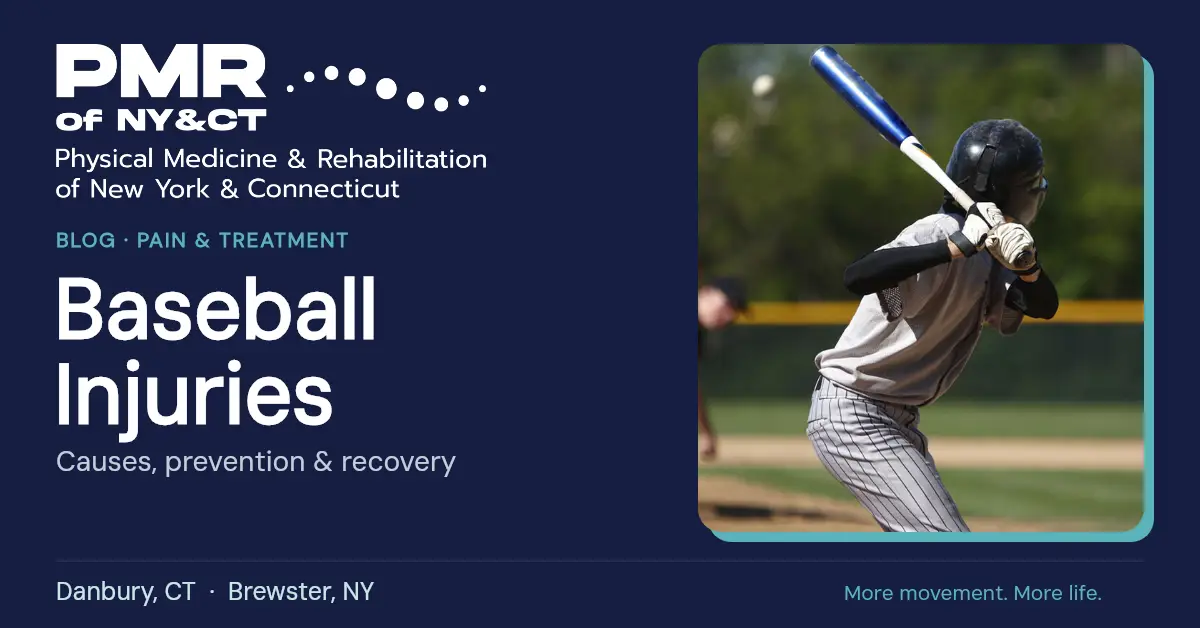
Baseball can look relaxed between pitches, but every play asks for a sudden burst of effort: a hard throw, a full-body swing or a sprint to first. Repeat those motions over a long season, and your body keeps score, especially your throwing arm.
Most baseball injuries fall into two groups. Overuse injuries build up from repeated throwing and swinging, while acute injuries happen in an instant, from a slide, a collision or a ball that hits the wrong spot. Many can be prevented, and most heal well with rest, rehab and a gradual return to the field.
Throwing injuries in the shoulder and elbow
Throwing a baseball is one of the fastest movements in sports, and it puts heavy stress on the shoulder and the inside of the elbow. Common throwing injuries include:
- Rotator cuff tears or irritation, and labral tears, in pitchers and other frequent throwers
- Little League elbow, an irritation of the growth plate on the inner elbow in young pitchers
- Little League shoulder, an irritation of the growth plate near the top of the upper arm bone
- Ulnar collateral ligament (UCL) injuries to the main stabilizing ligament of the inner elbow, which sometimes lead to the reconstruction known as Tommy John surgery
- Ulnar nerve irritation, which can cause tingling in the ring and little fingers
Fatigue raises the risk. When the muscles that support the arm tire, more stress shifts to the ligaments and, in kids, to the growth plates.
Injuries from hitting, running and sliding
Other injuries happen at the plate and on the bases:
- Oblique strain, a pulled side abdominal muscle, from powerful swings
- Low back pain from repeated twisting, especially when the hips are stiff
- Hand and wrist injuries, including a fracture of the hamate, a small wrist bone at the base of the palm, from the knob of the bat
- Hamstring strains while sprinting out of the box or chasing a fly ball
- Ankle and knee sprains from sliding or catching a cleat on the bag
- Finger, hand and shoulder injuries from head-first slides
Coaches often teach young players to slide feet first for that reason, and breakaway bases, which pop loose on impact, have cut sliding injuries in recreational softball.
Protecting young pitchers' arms
In growing players, the growth plates near the elbow and shoulder are weaker than the ligaments around them, so overuse tends to injure them first. Pitch Smart, the youth pitching guidelines from MLB and USA Baseball, recommends pitch count limits and rest days by age. Other habits help, too:
- Take the required rest days after pitching, and never pitch three days in a row
- Avoid playing for more than one team at the same time
- Don't have a pitcher also play catcher, since catchers make a lot of throws
- Take at least four months off from throwing each year, with two to three of those months in a row
- Stop at the first sign of arm pain or unusual fatigue
- Build leg, hip and core strength, since a good throw starts from the ground up
How baseball injuries are treated
Most throwing injuries start with a break from throwing, not from all activity, so players can usually keep training their legs and core while the arm settles. From there, a plan may include:
- Shoulder mobility work and rotator cuff strengthening
- Hip and trunk strength and flexibility, since stiffness or weakness there can shift load to the arm
- Chiropractic care for back, neck and hip stiffness that affects swinging or throwing
- An interval throwing program that slowly builds distance and number of throws before game play
Physical Medicine & Rehabilitation of NY & CT (PMR) brings these pieces together through its sports medicine services, so your chiropractor and physical therapist share one plan. A significant UCL tear or a growth plate fracture needs an orthopedic specialist first.
When baseball injuries need urgent care
Call 911 if a player:
- Collapses after being hit in the chest by a ball; start CPR and use an AED right away, since a blow at the wrong moment can rarely stop the heart
- Loses consciousness, vomits repeatedly or becomes increasingly confused after a hit to the head
See a doctor promptly for inner elbow pain in a young thrower, an elbow that won't fully straighten, a pop in the elbow or shoulder during a throw, a finger or joint that looks out of place, or numbness or weakness in the hand.
Frequently asked questions
Is arm soreness after pitching normal?
Mild soreness or tiredness in the shoulder or upper arm for a day after pitching is common. Pain is different. Sharp pain during a throw, pain in one spot on the inner elbow, pain that lingers more than a couple of days, or a sudden drop in velocity or control are signs to stop throwing and get the arm checked.
Should baseball players see a chiropractor or a physical therapist?
It depends on the problem, and many players benefit from both. A chiropractor can help with back, neck and hip pain or stiffness that changes how you swing or throw. A physical therapist typically leads rehab for throwing injuries, from shoulder blade strength to a gradual throwing program. Growth plate injuries, suspected fractures and ligament tears need a physician's diagnosis first.
Are curveballs bad for young pitchers?
Research hasn't settled this. Studies suggest that how many pitches a young player throws, and whether they pitch while tired, matter more than pitch type. Still, Pitch Smart advises pitchers ages 9 to 12 to throw only fastballs and changeups, and older players to add breaking pitches once both are consistent. Any pitch that causes pain is a reason to stop.
Request a baseball injury evaluation
Whether it's a sore arm, an aching back or an injury that won't settle, PMR can help find the cause and build a plan to get you throwing and swinging comfortably again. Request an appointment and our team will be in touch to set up a visit at one of our two offices.