
Published by PMR of NY & CT
You press on a sore spot in your shoulder and feel the ache spread up into your neck or head. That tender spot is probably a trigger point, a tight, irritable patch of muscle that many people simply call a knot.
Trigger point therapy is a set of hands-on and exercise-based treatments that aim to calm these muscle knots and ease the pain they cause. It may include sustained pressure, massage, stretching or, in some cases, injections from a physician. Most people do best combining in-office care with simple habits at home.
What trigger points are
A trigger point is a small, tender spot inside a band of tight muscle. Pressing on it often reproduces your familiar pain, and it may cause a small twitch in the muscle. Trigger points are most common in muscles that hold you up all day, such as the upper shoulders, neck, lower back and hips.
Researchers still debate exactly what happens inside a trigger point. One leading theory is that a tiny patch of muscle fibers gets stuck in a contracted state and becomes sensitive.
Why they cause pain in other places
Trigger points are known for referred pain, which means you feel the pain somewhere other than where the problem sits. Common patterns include:
- Upper shoulder muscles sending pain up the side of the neck toward the temple
- Muscles along the shoulder blade sending pain down the arm
- Deep hip muscles sending pain into the buttock and back of the thigh, which can mimic sciatica
- Jaw muscles causing aching around the ear or teeth
When trigger points are the main source of ongoing muscle pain, the condition is called myofascial pain syndrome. It's different from fibromyalgia, which causes widespread pain and tenderness rather than pain tied to specific muscles.
What causes trigger points
Trigger points tend to develop when a muscle is overloaded or held in one position too long. Frequent contributors include:
- Repetitive motions at work or in sports
- Long hours at a desk, behind the wheel or looking down at a phone
- Sudden strains or injuries
- Stress, which can keep muscles tense
- Poor sleep and limited physical activity
What trigger point therapy involves
A clinician starts by asking about your pain pattern and feeling for taut bands and tender spots. They also check for other causes, such as a pinched nerve or a joint problem, since these can look similar. Treatment then often combines several approaches:
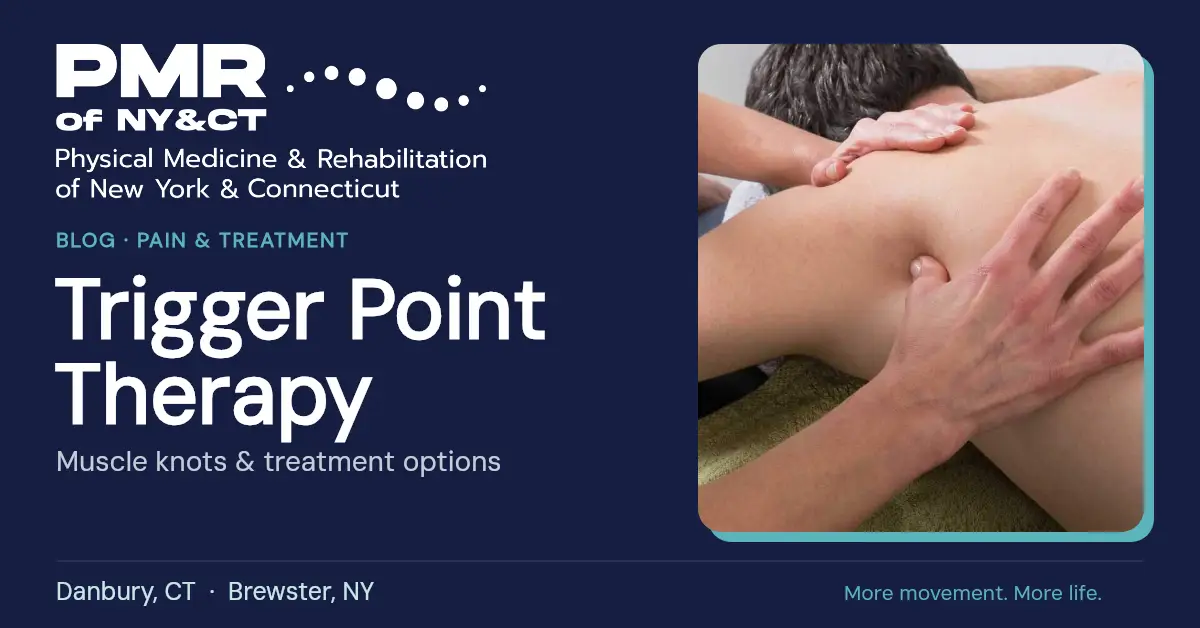
- Manual pressure: steady pressure on the trigger point for a short time, until the tenderness eases. This is the core of trigger point therapy in massage.
- Massage and stretching: soft tissue work and gentle stretches to lengthen the tight band of muscle.
- Heat and movement: warming the muscle and using it gently to restore normal motion.
- Exercise and posture work: strengthening and habit changes to reduce the strain that set off the trigger point.
- Needle-based options: a physician may offer trigger point injections, usually a local anesthetic, for stubborn cases. Dry needling, which uses a thin needle without medicine, is another option some trained clinicians provide.
Research on trigger point therapy is mixed. Many people report less pain after treatment, but studies vary in quality, so most plans pair hands-on care with exercise rather than relying on it alone.
Self-care you can try at home
Between visits, simple steps may help ease trigger points:
- Lean into a tennis ball or massage ball against a wall, using gentle to moderate pressure on the tender spot. Ease off if the discomfort builds rather than fades.
- Follow up with a slow stretch for the same muscle.
- Apply a warm pack for up to 20 minutes at a time to help tight muscles relax.
- Take short movement breaks during long stretches of sitting.
Avoid pressing on bony areas, the front of your neck or any spot that causes numbness, tingling or sharp pain.
When a muscle knot needs a closer look
See a doctor if pain doesn't improve after a few weeks of self-care, keeps spreading, or you develop numbness, tingling or weakness. Get prompt care for pain with fever or unexplained weight loss, or a hot, swollen, very tender area.
Chest wall muscles can have trigger points, but never assume chest pain is a knot. Call 911 for chest pain or pressure, especially if it spreads to your arm, jaw or back. Back pain with new loss of bladder or bowel control, or with saddle-area numbness, also needs emergency care.
Frequently asked questions
What is the difference between a trigger point and a muscle knot?
They're often used to mean the same thing. "Muscle knot" is the everyday term for a tight, tender spot you can feel. "Trigger point" is the clinical term, especially for a spot that refers pain to another area when pressed. Not every tight area is a trigger point, which is why a clinician will check where the pain travels.
How long does it take for trigger points to go away?
It depends on how long they've been there and what keeps aggravating them. A recent trigger point may ease within a few days of care, while long-standing ones often take several weeks of regular treatment and home exercises. Addressing the cause, such as your workstation, posture or training load, helps keep them from returning.
Are trigger point injections safe?
They're generally considered low risk when given by a trained physician. Common side effects include temporary soreness, numbness or bruising at the injection site. Less common risks include infection or bleeding, and rarely a collapsed lung when a muscle over the chest wall is injected. Tell your doctor about blood thinners or allergies.
Get help for trigger point pain
At Physical Medicine & Rehabilitation of NY & CT (PMR), medical massage therapy, chiropractic care and physical therapy can all address trigger points, and our physiatry and pain management team can evaluate pain that hasn’t responded to other care. Request an appointment and our team will contact you to schedule your visit.
More from the PMR Blog
Continue exploring articles in this topic category.