
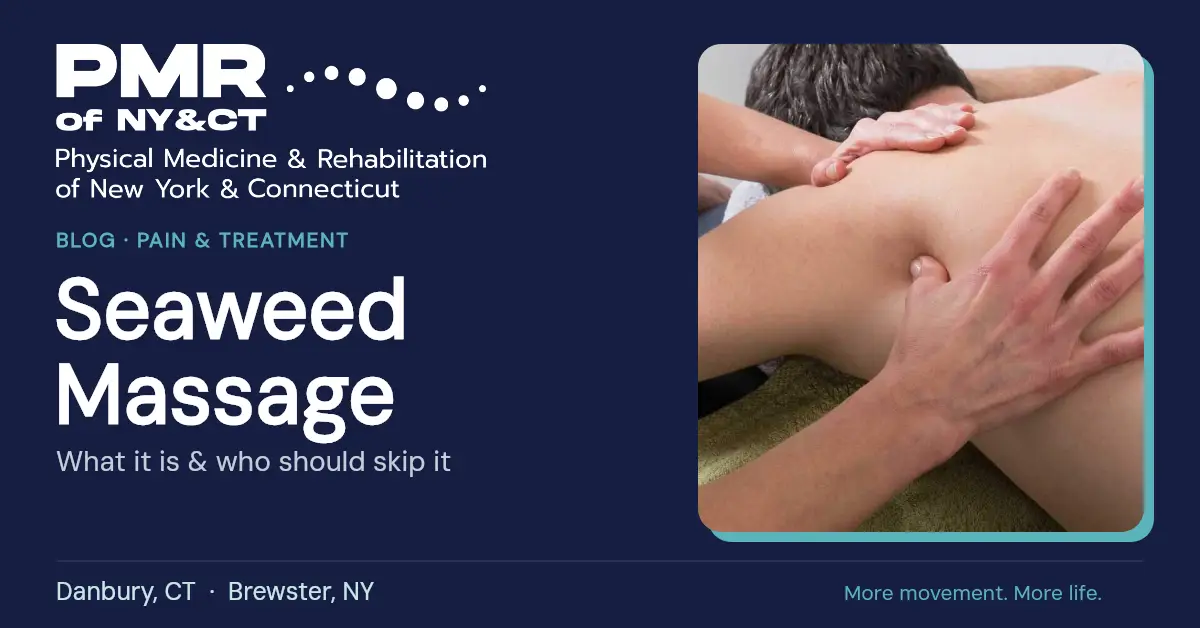
Seaweed treatments show up on plenty of spa menus, often with big promises attached: glowing skin, a slimmer waistline, a body cleansed of toxins. If you're wondering what a seaweed massage actually does, the honest answer is simpler, and still appealing.
A seaweed massage is a massage given with a seaweed-based cream, oil or gel, sometimes after a warm seaweed body wrap. Its real benefits are the ones you can feel: the relaxation that comes with any good massage, and skin that feels softer and more moisturized afterward. Claims that it melts fat, pulls out toxins or treats medical conditions aren't supported by research.
What happens during a seaweed massage
Seaweed treatments grew out of thalassotherapy, a style of spa care built around seawater, sea mud and marine plants. Sessions vary from spa to spa, but often look like this:
- Exfoliation. A scrub or dry brushing removes dead skin cells so the product spreads evenly.
- Seaweed body wrap. A paste of powdered or fresh seaweed, such as kelp, is spread over your skin. You’re wrapped in sheets or a warm blanket and rest for a short time.
- Rinse. The seaweed is showered or wiped off.
- Massage. The therapist finishes with a massage using a seaweed massage cream or oil.
Some spas skip the wrap and simply use a seaweed product for a standard relaxation massage. Expect a salty, ocean-like scent.
What you can realistically expect
Research on seaweed treatments specifically is limited, so it helps to look at the experience in parts:
- The massage. Slow, rhythmic massage helps many people relax and can ease everyday muscle tension for a while.
- The seaweed. Seaweed extracts are common in moisturizers, where they help skin hold on to water and give creams a smooth, silky texture. After exfoliation and a rich cream, your skin will likely feel softer and smoother.
- The warmth and quiet. A warm wrap and a calm room are part of the appeal, and for many people that downtime is the point.
These effects are pleasant but short-lived. Think of a seaweed treatment as a way to unwind and pamper your skin, not as therapy for a health problem.
Claims to take with a grain of sea salt
Spa marketing often goes further than the evidence. Be skeptical of claims that seaweed treatments:
- Remove toxins. Your liver and kidneys clear waste from your body. There’s no good evidence that seaweed draws toxins out through your skin.
- Cause weight loss. Inches lost after a wrap are mostly water from sweating and compression, and they come back once you eat and drink.
- Get rid of cellulite. A wrap may make skin look smoother for a few hours, but it doesn’t change the fat and connective tissue beneath it.
- Treat arthritis or other conditions. Seaweed products haven’t been shown to treat joint pain, circulation problems or any disease.
Seaweed massage safety: who should check first
Seaweed products are generally gentle, but they aren't right for everyone. Talk with your doctor first if you:
- Have a thyroid condition, since seaweed is naturally rich in iodine and how much your body absorbs during a treatment isn't well studied
- Are pregnant, especially before a heated wrap
- Have a heart condition, or tend to feel faint or overheated in warm settings
- Have eczema, psoriasis, rosacea or other sensitive skin
Skip the treatment over broken skin, a rash or sunburn. If being wrapped makes you feel closed in, ask for a massage without the wrap. Trying a seaweed cream at home? The American Academy of Dermatology suggests testing a new product on a small patch of skin, such as the inside of your elbow, twice a day for 7 to 10 days. Keep it away from your eyes and mouth.
Stop and rinse your skin if you feel burning or itching or see a rash. Call 911 for swelling of the lips, tongue or throat, trouble breathing, or hives with dizziness, which can be signs of a severe allergic reaction called anaphylaxis.
Spa massage vs medical massage
A seaweed treatment is built for relaxation. If you're dealing with muscle pain, an injury or a condition that limits how you move, medical massage therapy is a different kind of care. It starts with an assessment, focuses on specific problem areas and works toward goals such as turning your head or reaching overhead more comfortably. It can also be combined with chiropractic care or physical therapy.
Frequently asked questions
How often can you get a seaweed wrap?
There's no medical guideline. Spas often suggest a monthly visit, but more frequent wraps don't add lasting benefits, since the effects on your skin are temporary. If you have sensitive skin, give it time to settle between treatments, and stop if you notice redness or itching.
Is seaweed good for your skin?
Seaweed extracts can help skin hold moisture, which is why they appear in so many creams, masks and lotions. Used this way, they may leave skin feeling softer and smoother. They aren't a treatment for acne, eczema, psoriasis or other skin conditions, and some products contain fragrances that can irritate. If you have a skin condition, a dermatologist is the right professional to see.
Can you get a seaweed massage if you have a shellfish allergy?
A shellfish allergy alone usually doesn't rule it out. Seaweed isn't shellfish, and a shellfish allergy is a reaction to proteins in shellfish, not to iodine. Still, some spa products blend seaweed with other marine ingredients, so read the label or ask for a full ingredient list. If you've ever had a severe allergic reaction, talk with your allergist before trying a new product.