
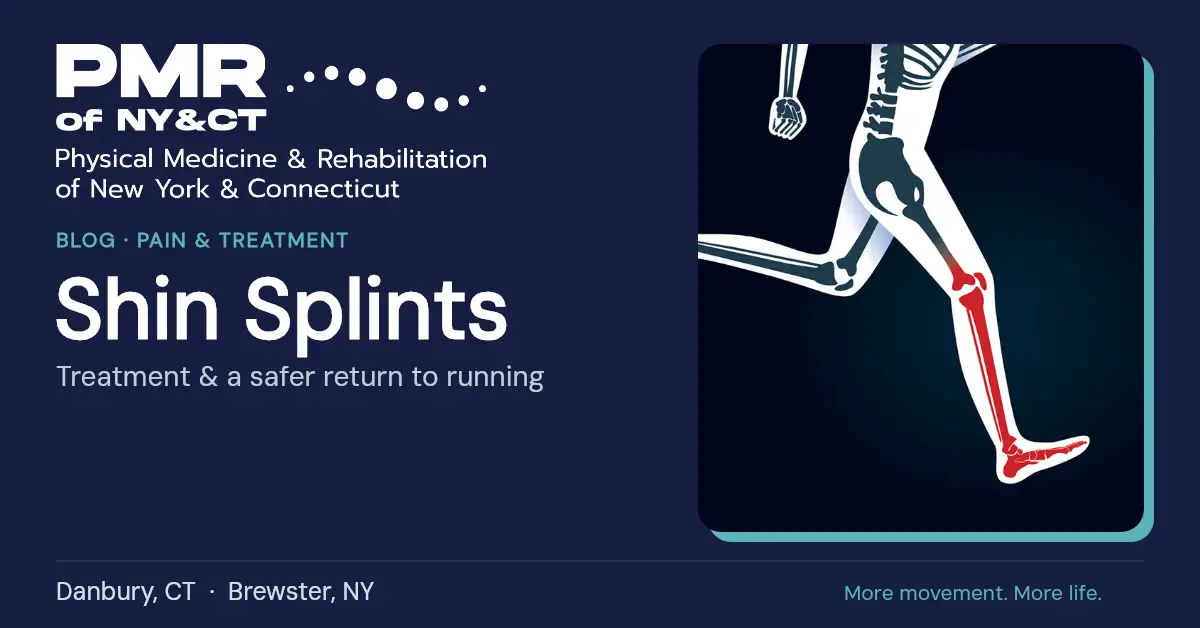
That dull, aching pain along the inner edge of your shinbone often shows up a few weeks into a new running plan, a sports season or a job that keeps you on your feet. Shin splints are common, and they usually settle with the right changes.
The basic plan for how to treat shin splints is simple: reduce the load that caused them, then rebuild gradually. Most people don't need to stop moving altogether. Below is what to do now and how to return to running with less chance of the pain coming back.
What shin splints are
Shin splints, known medically as medial tibial stress syndrome, cause pain along the inner border of the shinbone (tibia). The pain comes from stress on the bone and the tissue where lower leg muscles attach to it. When the bone is loaded faster than it can adapt, it becomes sore and tender.
Common triggers include:
- Increasing running distance, speed or hills too quickly
- Starting a new sport or returning after time off
- Running mostly on hard or sloped surfaces
- Worn-out shoes, or feet that roll inward heavily
- Weak calf and hip muscles
- Not eating enough to fuel your training
Shin splints vs stress fracture: how to tell
Shin splints and stress fractures sit on the same spectrum of bone stress, but a fracture needs more protection and a longer recovery.
Shin splints often:
- Cause pain along a longer stretch of the inner shin, usually several inches
- Hurt at the start of a run, ease as you warm up, then ache afterward
- Feel tender when you press along the bone
A stress fracture is more likely when:
- Pain is sharp and pinpointed to one small spot
- It hurts more as you keep running, or while walking or resting
- You have night pain or swelling, or hopping on that leg hurts
If any of the second set sounds familiar, stop running and get an exam. A stress fracture doesn't always show on an early X-ray, so your provider may recommend other imaging.
How to treat shin splints at home
Most shin splints improve with simple, consistent steps:
- Cut back, don’t necessarily stop. Reduce running distance and intensity enough that pain stays mild during activity and doesn’t linger into the next day.
- Cross-train. Cycling, swimming or pool running keep up your fitness with less impact.
- Ice after activity. Ice the sore area for 15 to 20 minutes, wrapped in a thin towel.
- Check your shoes. Replace worn-out pairs with shoes that feel comfortable and stable.
- Use pain relievers with care. A pharmacist or doctor can tell you whether an over-the-counter option is safe for you.
Rebuilding strength and returning to running
Knowing how to treat shin splints also means keeping them from returning. Rest calms the pain, but strength helps protect you. A physical therapy program for shin splints often includes calf raises, foot and ankle strengthening, hip and core work, and gradual impact training such as hopping.
Once everyday activity has been pain-free for at least two weeks and you can hop on the sore leg without pain, a gradual return to running often looks like:
- Short, easy runs on soft, flat surfaces, sometimes alternating running and walking
- Running every other day at first, so the bone has time to adapt
- Increasing time or distance in small steps, one change at a time
- Saving speed work and hills until regular runs feel easy
A clinician can also check your running form, since a slightly shorter stride may reduce load on the shins.
Where hands-on care fits
Soft tissue work on tight calf muscles, joint mobilization of the foot and ankle, and a look at how your hips, knees and feet line up during movement may ease pain. Physical Medicine & Rehabilitation of NY & CT (PMR) offers sports medicine, physical therapy and chiropractic care that can work together on a recovery plan.
Research on hands-on care for shin splints is limited, so it belongs alongside load management and strengthening.
When to stop and get your shin checked
Make an appointment if pain hasn't improved after two to three weeks of reduced activity, if it is getting worse, or if it keeps returning each time you build back up.
Get prompt care for pain that is sharp and localized, shin pain at rest or at night, or swelling and warmth in the lower leg. Go to an emergency room for severe, worsening pain with a tight, swollen calf or shin, especially with numbness or tingling, after an injury or hard exercise. That can signal acute compartment syndrome, which needs emergency treatment.
Frequently asked questions
How long do shin splints take to heal?
Pain often settles after two to four weeks away from running and other high-impact exercise, but full healing can take three to six months. The timeline depends on how early you adjust your training and how gradually you return. Pushing through worsening pain usually slows recovery and raises the risk of a stress fracture.
Should I run through shin splints?
Light running may be fine if pain stays mild, doesn't worsen during the run and is gone by the next day. If pain changes how you run, builds as you go or lingers, stop and switch to low-impact cardio for a while. Running through sharp or worsening pain is a common way shin splints turn into a stress fracture.
Can compression sleeves help shin splints?
Some runners find compression sleeves make their legs feel more comfortable, and they are low risk. Evidence that they speed healing or prevent shin splints is limited. They may be a reasonable add-on, but they don't replace reducing your load, strengthening your lower legs and building back gradually.
Request an appointment at PMR
If shin pain keeps interrupting your training or your workday, our team can help find what is driving it and build a return-to-activity plan. Request an appointment and we will contact you to schedule a visit at PMR of Danbury or PMR of Brewster.