
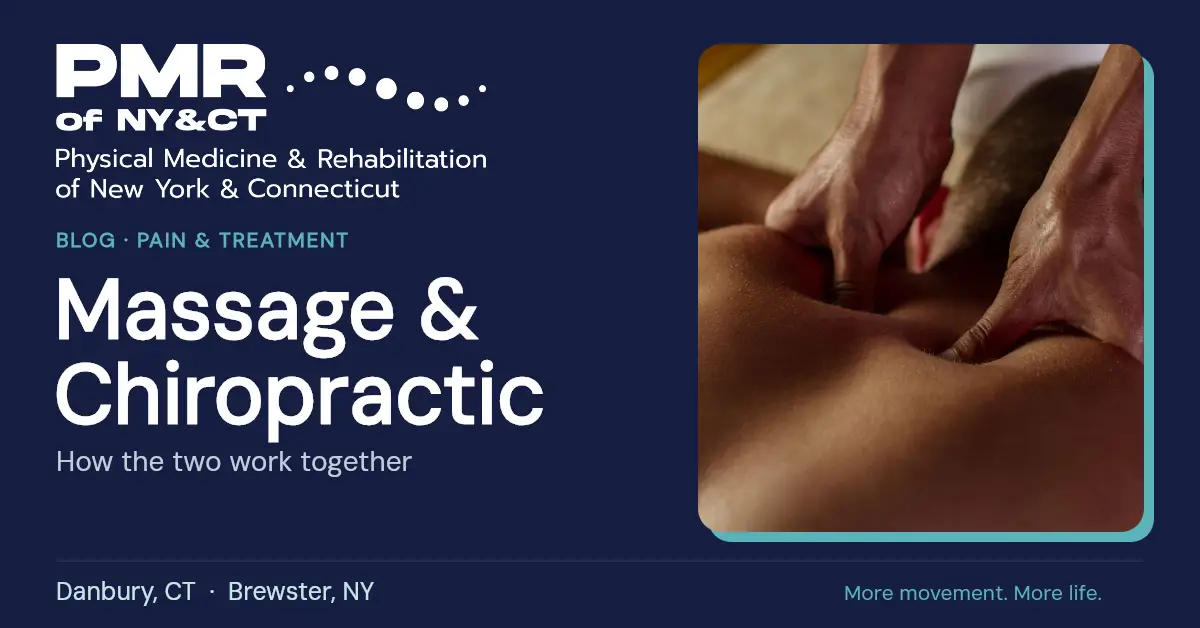
When your back or neck hurts, the problem is rarely just one thing. Stiff joints and tight, guarded muscles tend to show up together, and each can keep the other going. That's why many people find that massage and chiropractic care make a practical pair.
The two approaches work on different parts of the same problem. Massage therapy focuses on muscles and other soft tissue, while chiropractic care focuses on how your joints move, especially in your spine. Research on combining them is still limited, but each has a recognized place in treating common problems such as low back pain, and they fit together naturally in one care plan.
What each approach focuses on
Both aim to ease pain and help you move more freely, but they get there in different ways:
- Massage therapy works on muscles, tendons and the connective tissue around them, using pressure, kneading and stretching. Medical massage therapy targets a specific problem and treatment goal rather than general relaxation.
- Chiropractic care starts with an exam of your spine and joints. A chiropractic adjustment is a quick, controlled movement that aims to restore motion to a stiff joint, and many visits also include gentler mobilization, exercises and posture advice.
There is some overlap. Many chiropractors use soft tissue techniques, and good massage therapists pay attention to how you move. Still, a full massage session and a chiropractic care visit each go deeper into their own area.
Why massage and chiropractic pair well
Muscles tend to tighten around a sore or stiff joint, almost like a splint. That guarding protects the area at first, but it can make movement harder and an adjustment less comfortable. The two approaches can support each other in several ways:
- Massage eases muscle tension, which many people find makes an adjustment more comfortable.
- An adjustment may improve motion in a stiff joint, and massage can help the surrounding muscles relax into that range.
- Massage is calming. If you feel nervous before your first adjustment, a relaxed body can make the visit easier.
- Both tend to work best alongside exercises that help you keep your progress.
For low back pain that has lasted less than three months, the American College of Physicians’ 2017 guideline lists both massage and spinal manipulation among the nondrug treatments to try first, though it rates the evidence for each as low quality. Results with combined care vary from person to person.
Massage before or after chiropractic: does order matter?
Either order can work. The better choice depends on what's limiting you most:
- Massage first may suit you if your muscles are very tight or you tend to brace during treatment. Warm, relaxed tissue can make the adjustment easier to receive.
- Adjustment first may suit you if a stiff joint is the main thing holding you back. Massage afterward can help you settle and relax the muscles around the treated area.
Same-day sessions are common, but spacing them a day or two apart works too. Your chiropractor and massage therapist can help you plan around your schedule and how you feel after each visit.
Conditions people often treat with both
People often use chiropractic and massage therapy together for:
- Low back pain and muscle spasms
- Neck pain and stiffness from desk work, driving or phone use
- Tension headaches linked to tight neck and shoulder muscles
- Mid-back tightness and posture strain
- Strains and other soft tissue injuries from sports or everyday activities
A good plan starts with an exam, sets clear goals and checks your progress along the way, so your care can change as you improve.
When hands-on care should wait
Hands-on care isn't the right first step for every kind of pain. Get medical care promptly if your pain:
- Started after a fall, car accident or other injury
- Comes with numbness, tingling or weakness in an arm or leg
- Comes with fever, chills or unexplained weight loss
- Wakes you at night or keeps getting worse
Go to an emergency room if back pain comes with trouble controlling your bladder or bowels, or with numbness in the groin or inner thighs. Call 911 if neck pain comes with stroke signs, such as a drooping face, sudden one-sided weakness or trouble speaking. Before any hands-on care, tell your providers about bone-thinning conditions, bleeding problems or blood thinners.
Frequently asked questions
Can a chiropractor give you a massage?
Many chiropractors use soft tissue techniques during a visit, such as pressure on a tight muscle or assisted stretching. A full massage session, though, is usually given by a licensed massage therapist, whose training focuses entirely on soft tissue. Connecticut and New York both license massage therapists, so it's reasonable to ask about credentials before you book.
How often should you get massage and chiropractic care?
There's no single schedule that fits everyone. Visits are often closer together at first, when pain limits you most, then spaced out as you improve and take on more of the work with home exercises. A good plan includes regular check-ins, so you and your providers can see whether the schedule still makes sense for you.
Can massage and chiropractic care help after a car accident?
They're often part of recovery from soft tissue injuries such as whiplash, once a medical evaluation has ruled out fractures and other serious injuries. Get checked soon after a crash even if you feel fine, since pain and stiffness can take a day or more to show up. Our page on car accident injury treatment explains how that care works.
Request an appointment at PMR
Physical Medicine & Rehabilitation of NY & CT (PMR) offers both chiropractic care and medical massage therapy, so your providers can coordinate one plan around your goals. Find the office nearest you on our locations page, or request an appointment and our team will contact you to schedule your visit.