
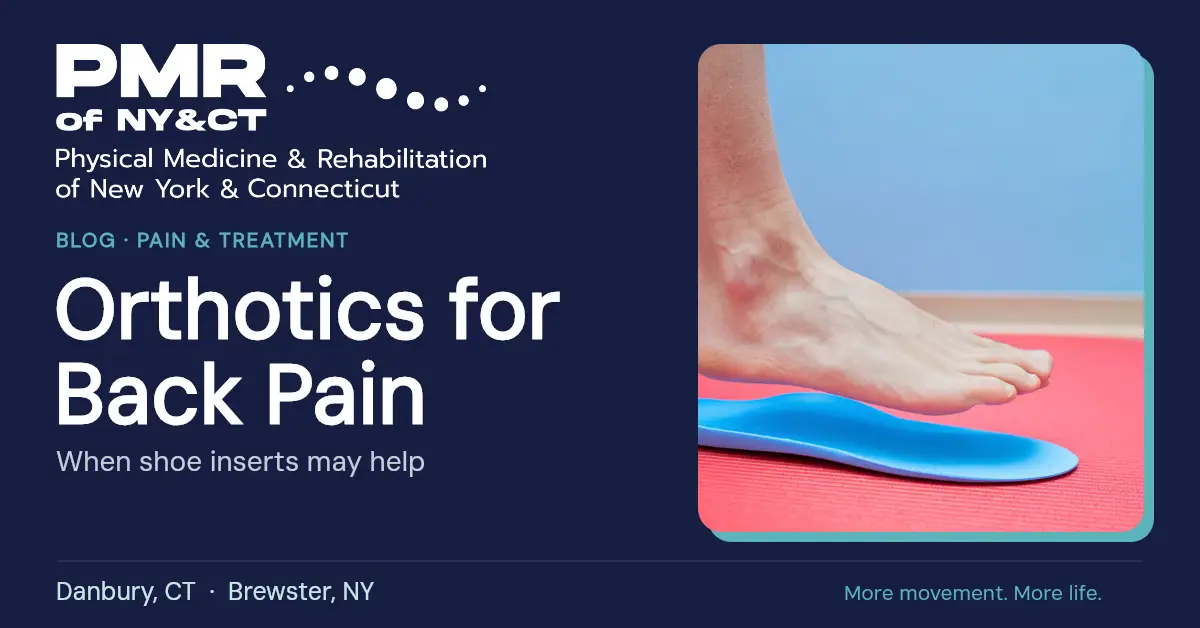
When your lower back aches after a long day on your feet, it is natural to wonder whether your shoes are part of the problem. Orthotics for back pain may help some people, especially those with flat feet, a leg length difference or long days standing on hard floors.
They are not a fix for every back. Here is how inserts are meant to work, what the research shows and how to tell whether they are worth trying.
How orthotics are meant to help your back
Orthotics don't act on your spine directly. They change how your foot meets the ground by supporting the arch, limiting how far the foot rolls inward, cushioning impact or evening out a leg length difference. The idea is that a steadier base changes how force travels up through your knees, hips and pelvis to your lower back.
That reasoning holds up best when there is a clear mechanical problem, such as a measured leg length difference that tilts the pelvis, or feet that collapse inward with every step. When your feet aren't part of the picture, inserts have little to offer.
Over-the-counter vs custom orthotics
Shoe inserts come in a few main types:
- Over-the-counter orthotics: ready-made arch supports and cushioned insoles sold in stores and pharmacies
- Custom orthotics: inserts made from a mold, cast or scan of your feet, built for your foot shape and how you walk
- Heel lifts: small wedges that raise one heel, sometimes used for a measured leg length difference
Custom devices cost more and take longer to get. For many people, a good ready-made insert is a reasonable first step.
What research says about orthotics for back pain
The evidence is limited and mixed. Studies suggest shoe inserts don't prevent back pain in people who don't already have it. For people with ongoing low back pain, a handful of trials have found modest improvements with orthotics, but the question is far from settled.
Clinical guidelines lean toward staying active, exercise, heat, massage and spinal manipulation. The UK's National Institute for Health and Care Excellence (NICE) goes further and advises against offering foot orthotics to treat low back pain itself. Inserts make the most sense when a foot problem is part of the picture.
Who is most likely to benefit
Orthotics for back pain may be worth discussing with your provider if:
- You have flat feet, or feet that roll inward heavily
- A clinician has measured a true leg length difference
- You also have foot problems, such as plantar fasciitis
- You spend long hours standing on hard floors
They are less likely to help when back pain comes from a disc problem, a pinched nerve or spinal stenosis. Leg pain or heaviness that builds with walking and eases when you sit or lean forward, for example, is a common stenosis pattern. An exam of your back, hips and feet helps sort out which is which. Our lower back pain page explains the common causes and how they are treated.
Getting the most from shoe inserts
If you and your provider decide to try orthotics:
- Break them in. Wear them an hour or two the first day and add time gradually over a week or two.
- Match them to your shoes. Inserts work best in shoes with a firm heel and enough room. Remove the original insole first.
- Replace worn shoes. A collapsed midsole can undo the support an insert provides.
- Keep exercising. Core, hip and back strengthening, along with chiropractic care or physical therapy, address the parts of back pain that inserts can’t.
When back pain needs prompt care
Shoe inserts are for everyday aches, not warning signs. Back pain that comes with numbness between the legs, new problems with bladder or bowel control, or a leg that keeps getting weaker needs emergency care, so call 911 or go to an emergency room.
Back pain with a fever needs a same-day medical visit. Book a visit soon if it started after a fall or accident, comes with unexplained weight loss, or is worse at night.
Frequently asked questions
Can orthotics make back pain worse?
They can, especially if they fit poorly, are too rigid or are worn all day from the start. Mild aches in the feet, knees or back are common for the first week or two while your body adjusts. If discomfort keeps building, or new pain lasts beyond a couple of weeks, stop wearing them and have the fit checked.
Are custom orthotics better than store-bought insoles?
Not always. Many people do just as well with a quality over-the-counter insert, at a lower cost. Custom orthotics may make sense for an unusual foot shape, a significant leg length difference or diabetes-related foot problems, or when ready-made inserts haven't helped. Research comparing the two for back pain specifically is limited.
How long do orthotics take to work?
Give them a few weeks of regular wear once you are used to them. Some people notice they can stand or walk longer within days, while changes in back pain, if they come, tend to be gradual. If nothing has changed after several weeks of consistent use alongside your exercises, inserts may not be the missing piece, so check back with your provider.
Request an appointment at PMR
If back pain is wearing you down, our team can look at the whole picture, from your feet to your spine, and build a plan around your goals. Request an appointment and we will contact you to schedule a visit at PMR of Danbury or PMR of Brewster.