
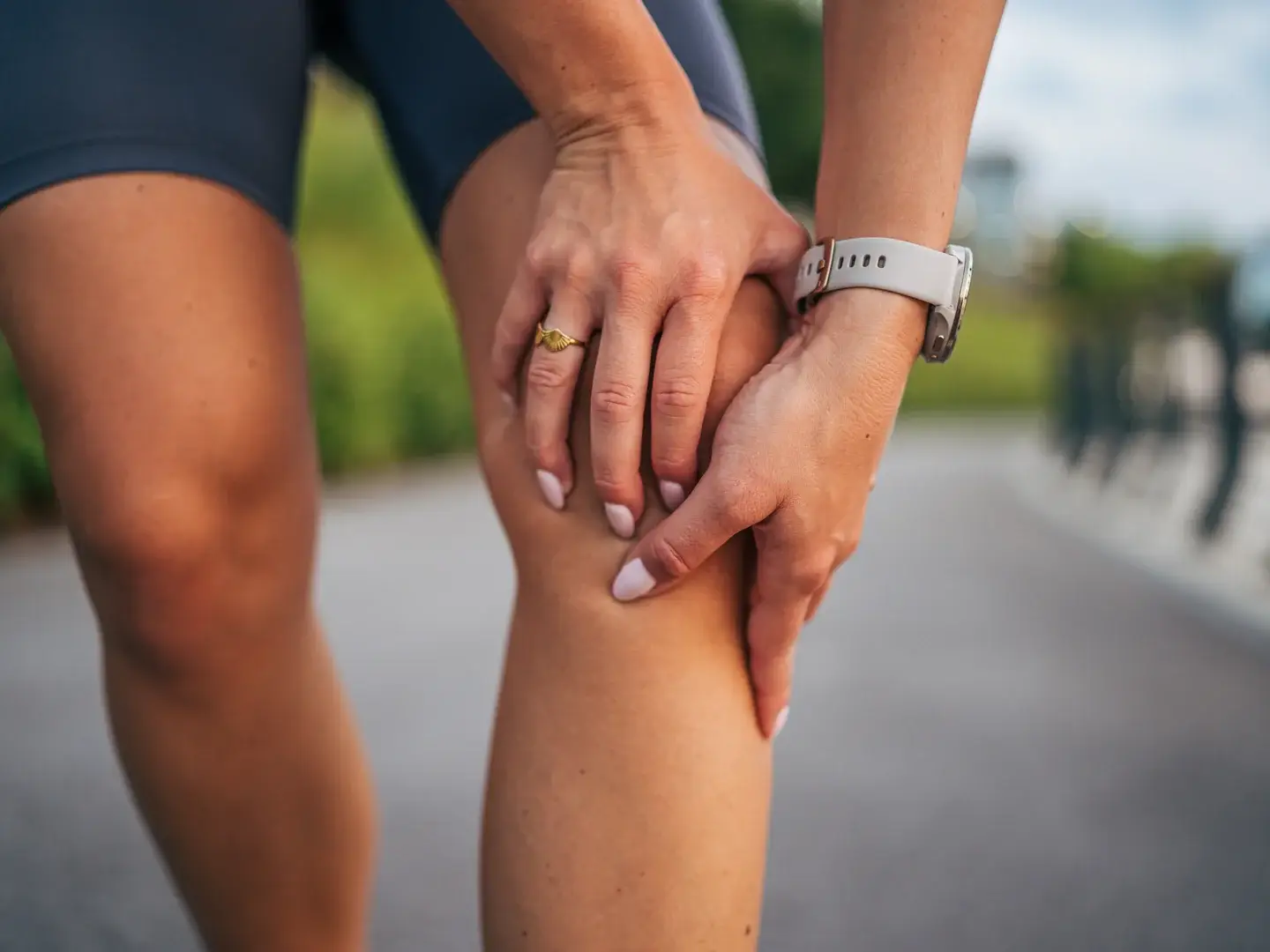
Your knees take load every time you stand up, climb stairs or land from a jump, so a painful knee can shrink your whole day. Knee pain treatment at Physical Medicine & Rehabilitation of NY & CT (PMR) begins with a careful exam to find the cause, then builds a plan around strength, movement and a gradual return to what you enjoy. Knee care is available at our Danbury and Brewster, NY offices.
Common causes of knee pain
Runner’s knee (patellofemoral pain)
Pain around or behind the kneecap that flares on stairs, in squats or after sitting with bent knees is often patellofemoral pain, nicknamed runner’s knee. It is common in runners and teens and usually reflects how the kneecap is loaded, not damage inside the joint.
Knee arthritis
Knee osteoarthritis brings stiffness after rest, aching on longer walks, and sometimes swelling or a grinding feeling. It becomes more common with age and after old knee injuries.
Meniscus tears
The menisci are rubbery shock absorbers inside the knee. In younger people a twisting injury can tear one, while in older adults tears often develop gradually. Joint-line pain, swelling the next day and catching are typical signs.
Ligament injuries
A pop during a pivot or awkward landing, followed by quick swelling and a knee that feels unstable, suggests an ACL injury. A blow to the outside of the knee more often sprains the MCL on the inner side.
Tendon pain, including jumper’s knee
Pain just below the kneecap that worsens with jumping or squatting often comes from the patellar tendon, known as jumper’s knee. The IT band along the outer knee, a common problem for runners and cyclists, can cause similar overuse pain.
When to get urgent care for knee pain
A knee that suddenly stops working properly needs prompt attention. Go to urgent care or the ER, or call 911 for a severe injury, if:
- Your knee is locked and you cannot straighten it
- You felt a pop, the knee swelled within hours, and now you cannot bear weight or it keeps giving way
- The knee is hot, red and swollen and you have a fever, which can signal an infection
- The knee or kneecap looks out of place after an injury, or the foot below it loses color or feeling
How we evaluate your knee
Your clinician asks how the pain started, which movements provoke it and what you need your knee to do. The exam covers swelling, range of motion, ligament and meniscus tests, and how you squat, step down and balance on one leg. Because weak or stiff hips can overload the knee, your hip and ankle are checked too. When imaging is warranted, PMR offers X-rays and can refer you for an MRI or to an orthopedic surgeon.
Knee pain treatment options at PMR
Knee pain physical therapy
Strength sits at the center of most knee plans. Physical therapy targets the quadriceps, hamstrings, hip and calf muscles, progressing from simple exercises to loaded work in our on-site gym. Sessions may also include hands-on joint and soft-tissue care, balance training and coaching on running or squatting form. Chiropractic care and massage may also help when the hip, pelvis or thigh muscles change how load reaches the knee.
Load changes, taping and bracing
You rarely need to stop moving. We help you trim training volume or swap activities for a few weeks, and your clinician may suggest taping or a brace for short-term support.
Shockwave for tendon pain
For patellar tendon pain that has not settled with exercise, shockwave therapy may be added at our Danbury and Brewster offices. It supports your exercise program rather than replacing it.
Rehab around surgery
When an injury or advanced arthritis leads to surgery, strengthening beforehand may make recovery smoother, and our post-surgical rehab program follows your surgeon’s protocol afterward, so knee pain treatment continues through every stage.
Knee pain relief you can start at home
- Swap running or jumping for cycling, swimming or flat walking for a while
- Cut back the activity that flares your knee rather than stopping everything
- Ice for 10 to 15 minutes after activity if the knee swells
- Avoid deep squats or kneeling if they hurt, and rebuild sport volume in small steps
Frequently asked questions
Is it safe to exercise with knee pain?
For most knee problems, yes, and exercise is usually part of the answer. Mild discomfort that settles within a day is generally acceptable. Sharp pain, swelling the next day or a knee that gives way is a sign to ease off and get it checked. Your physical therapist will help you find the right level and build from there.
Do I need an MRI for knee pain?
Often not at first. A hands-on exam can identify many knee problems, and MRI findings such as meniscus wear are common in people without pain. An MRI makes more sense when a major ligament or meniscus injury is suspected, the knee locks, or rehab isn’t helping. We refer you when it is needed.
Can physical therapy help a meniscus tear without surgery?
Many people with meniscus tears, especially the gradual tears common after middle age, do well with physical therapy focused on strength and movement. Surgery is more likely when the knee locks, a large tear keeps catching, or rehab isn’t helping. That decision belongs to you and an orthopedic surgeon, and we can coordinate the referral.
How is runner’s knee treated?
Runner’s knee often follows a jump in training, more hills or stairs, or weak hip and thigh muscles. Knee pain treatment for it usually combines a temporary cut in running volume, hip and quadriceps strengthening, and a gradual return to running. Many people keep exercising in some form throughout recovery, and results vary.
Get help for knee pain
To start knee pain treatment, reach PMR of Danbury, CT at (203) 744-8013 or PMR of Brewster, NY at (845) 279-1135, or book an appointment online. If another joint is bothering you too, look through the conditions we treat.