
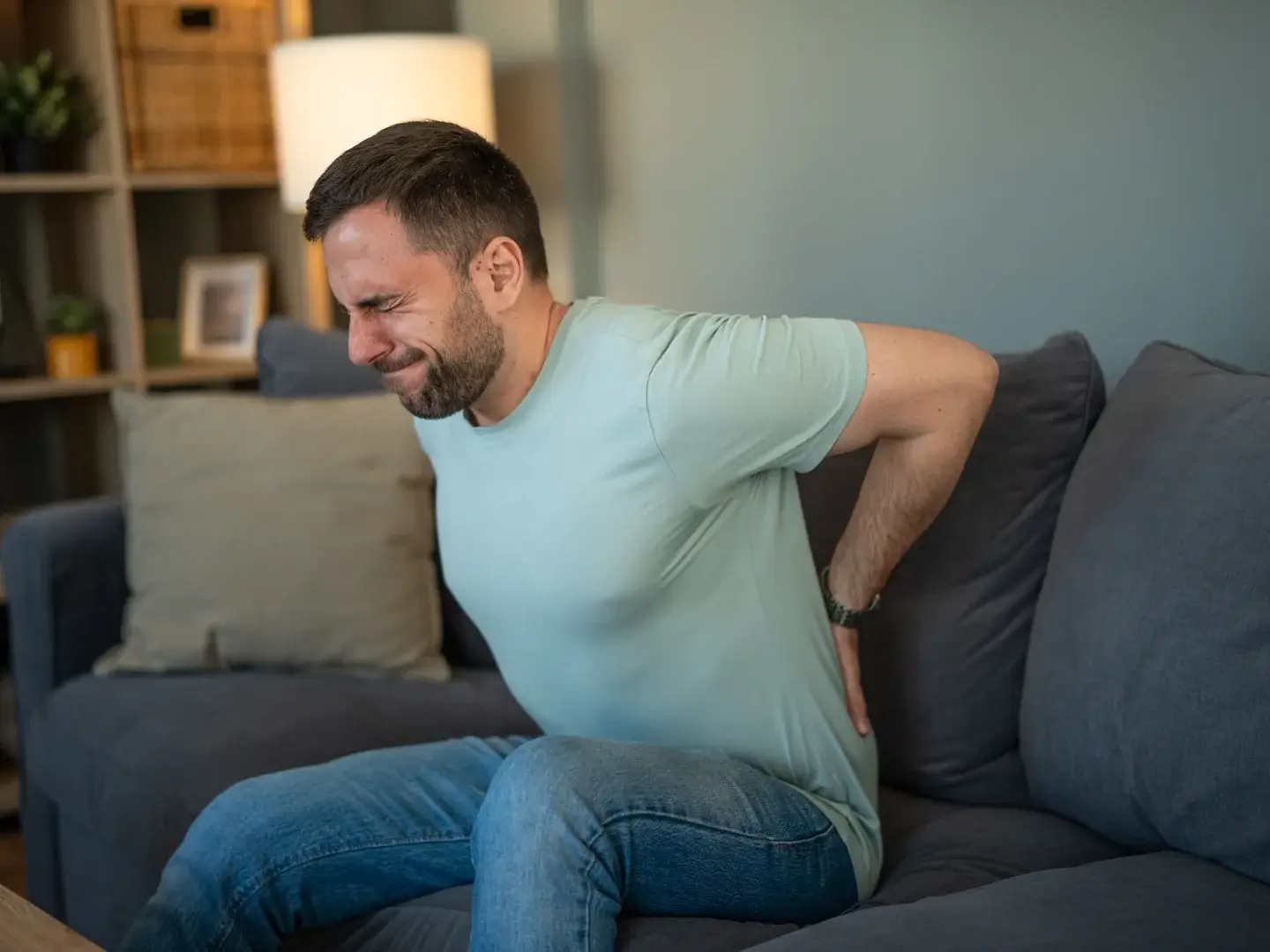
The right lower back pain treatment depends on what is irritated: a strained muscle, a stiff joint, a disc or a nerve. At Physical Medicine & Rehabilitation of NY & CT (PMR), chiropractors, physical therapists and a physiatry and pain-management team work together in Danbury, CT and Brewster, NY to find the source and plan your recovery. Most low back pain is mechanical, coming from muscles, joints and discs rather than serious illness, and many episodes ease within a few weeks.
What causes lower back pain?
Your lumbar spine bears much of your body weight. Common sources of pain include:
- Muscle or ligament strain from a heavy lift, a sudden twist or a long day of yard work
- Disc problems, such as a bulging or herniated disc, which can also irritate a nerve root
- Facet or sacroiliac (SI) joint irritation, often sore with arching or long periods of standing
- Spinal stenosis, age-related narrowing that can bring heavy, tired legs when you walk
- Posture and deconditioning, such as long hours of sitting with weak hip and core muscles
Symptoms you may notice
- A dull ache or stiffness, often worse in the morning or after sitting
- Muscle spasm that makes it hard to stand up straight
- Sharp pain when you bend, lift or get out of the car
- Pain that spreads into the buttock or thigh
- Pain, numbness or tingling below the knee, a sign that a nerve is involved, as with sciatica
When to get urgent care for back pain
Go straight to the nearest emergency room, or call 911, if back pain comes with:
- Loss of bladder or bowel control, or trouble passing urine
- Numbness in the groin, genitals or inner thighs
- Sudden or worsening weakness in one or both legs
- A high fever, chills or feeling very ill
- A serious injury, such as a bad fall or a car crash
See your doctor promptly if pain wakes you at night or comes with unexplained weight loss, or if you’ve had cancer.
How PMR evaluates low back pain
Your first visit starts with your history: when the pain began, what changes it and what your days ask of your back. The exam then checks:
- How you bend, arch, twist and walk
- Joints and muscles that feel stiff, tender or guarded
- Reflexes, strength and sensation in your legs, plus a straight-leg raise for nerve tension
- Hip mobility, since stiff hips can overload the low back
Most people with new low back pain don’t need imaging. When it would change your care, PMR can take X-rays or refer you for an MRI.
Lower back pain treatment at PMR
With chiropractic, physical therapy and physiatry under one roof, your providers can combine services and compare notes. Options include:
- Chiropractic care: adjustments, mobilization and soft-tissue work from a low back pain chiropractor to ease stiffness and improve spinal motion.
- Physical therapy: back pain physical therapy to build trunk and hip strength, restore mobility and retrain lifting, progressing in the on-site gym.
- Massage therapy to calm muscle spasm so exercise feels easier.
- Spinal decompression on a DTS table for some disc-related cases, used alongside exercise, not in place of it.
- Acupuncture, which some people with long-lasting low back pain find a helpful addition.
- Physiatry and pain management when pain lingers or a nerve is involved, adding diagnostic testing and referrals, including to a spine surgeon if needed.
Results vary. The goal of lower back pain treatment is measurable progress: less pain with daily tasks, easier movement and a plan for handling flare-ups yourself.
Self-care for lower back pain relief
These steps are safe for most people with a new, uncomplicated backache:
- Keep moving. Short, frequent walks usually help more than bed rest.
- Use heat or ice, whichever feels better, for up to 20 minutes with a towel against your skin.
- Break up long drives and desk work with short walks.
- Sleep on your side with a pillow between your knees.
- Return to lifting gradually, bending at the hips and knees.
- Stop any stretch that sends pain farther down your leg.
Preventing the next flare-up
Regular walking, swimming and hip and core strengthening help your spine handle load, and a healthy weight and not smoking may help too. Before you finish care, your PMR team turns your exercises into a home program.
Frequently asked questions
How long does lower back pain usually last?
Acute low back pain often eases within a few days to a few weeks, and most people recover well. Pain lasting longer than about three months is called chronic and usually needs a structured plan built on exercise and gradual return to activity. If yours isn’t improving after a couple of weeks, get it checked.
Should I see a chiropractor or a physical therapist?
You don’t need to pick one. At PMR, chiropractors concentrate on joint motion and hands-on care, physical therapists on exercise, strength and movement retraining, and many people with low back pain use both. After your evaluation, your team recommends the mix that fits your findings and shares notes so your plan stays coordinated.
Do I need an X-ray or MRI first?
Usually not. For most new low back pain, imaging doesn’t change treatment, and scans often show age-related changes that aren’t causing your pain. It makes more sense with warning signs, worsening nerve symptoms, a recent injury or pain that isn’t improving with care. Your provider will tell you if you need it.
Is lower back pain treatment covered by insurance?
PMR accepts many major health plans, including Aetna, Cigna, Oxford and UnitedHealthcare, as well as auto accident, workers’ compensation and personal injury claims. PMR submits claims to most insurers for you and walks you through your benefits and eligibility at the first visit.
Further Reading
Book an appointment
Looking for back pain treatment in Danbury, CT or Brewster, NY? Call the office nearest you or use our online appointment request form.
- PMR of Danbury, CT, 1 Padanaram Road: (203) 744-8013
- PMR of Brewster, NY, 1620 Brewster Town Center: (845) 279-1135
Pain somewhere else too? Browse all the conditions we treat.
Related educational reading
Continue reading: Diet for Back Pain: 4 Nutrition Basics That Support Your Recovery; Natural Pain Relief: Everyday Ways to Ease Muscle and Joint Aches. These articles provide general information; they do not replace an individual evaluation.