
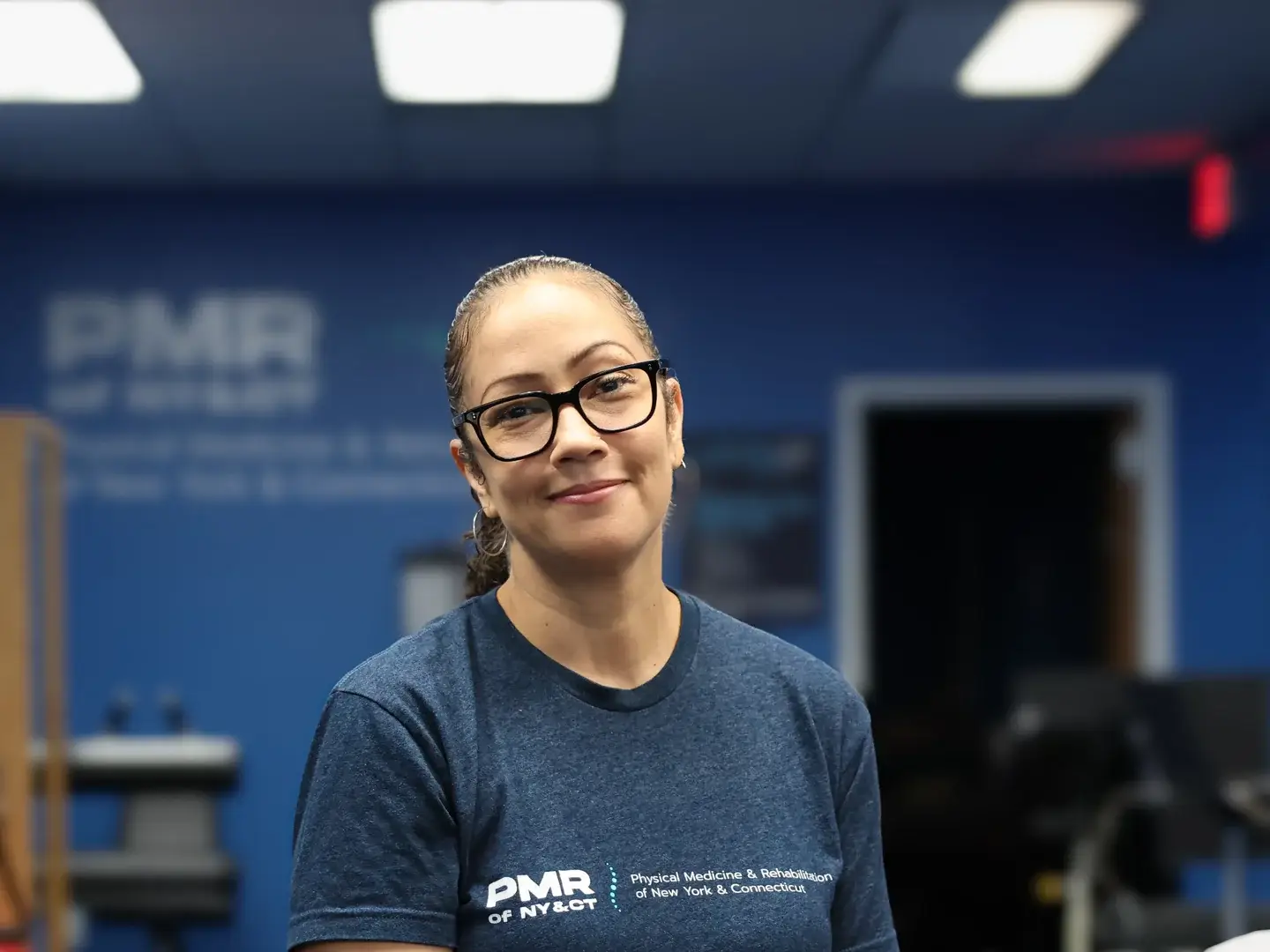
Physical Medicine & Rehabilitation of NY & CT (PMR) offers acupuncture for pain at its Danbury, CT and Brewster, NY offices. A licensed acupuncturist places very fine, sterile needles at selected points to help ease pain and muscle tension, often alongside chiropractic care and physical therapy. Many people try acupuncture for back pain, neck pain or headaches that keep returning, or when they want an option that doesn’t rely only on medication.
How acupuncture for pain works
Acupuncture comes from traditional Chinese medicine, which describes points along channels in the body. Modern research looks at it another way: needling stimulates nerves in skin and muscle, which may change how your nervous system processes pain signals and prompt the release of natural pain-relieving chemicals such as endorphins. Scientists are still working out the details, and people respond differently. At PMR, acupuncture therapy is used for musculoskeletal pain, meaning problems in the muscles, joints, nerves and connective tissue.
Conditions with the most research support
Evidence for acupuncture is strongest for long-lasting pain, including:
- chronic low back pain
- chronic neck pain
- knee pain from osteoarthritis
- tension-type headaches and migraine prevention (see headaches and migraines)
People also come to PMR for acupuncture for sciatica, shoulder pain, jaw (TMJ) pain, tendon problems, plantar fasciitis and muscle spasms. Evidence for these is more limited or mixed, so we treat them as a trial: a short course, then an honest look at whether it’s helping.
Meet your acupuncturist
Acupuncture is a licensed profession in both New York and Connecticut.
What happens at an acupuncture visit
Your first visit starts with a consultation about your pain, health history and medications, plus a movement assessment to see how the problem affects the way you bend, turn or walk. Your acupuncturist explains the plan and answers your questions before any needles go in.
During treatment, you rest on a padded table while your acupuncturist places needles at points chosen for your condition, some near the painful area and some farther away. The needles are removed and discarded after you’ve rested. Sessions are one-on-one, and your pain and movement are tracked from visit to visit.
How many sessions you may need
There’s no standard number. Some people notice a change within the first few visits, others need longer, and some don’t respond. Your acupuncturist will usually suggest a short course and then reassess with you. If you aren’t seeing meaningful progress, we’ll talk about other options rather than continue by default.
Is acupuncture safe?
When a licensed practitioner uses sterile, single-use needles, the risk of side effects is low. The most common are:
- mild soreness or a small bruise where a needle went in
- a drop of blood at a needle site
- brief lightheadedness or tiredness after a session
Serious problems are rare. Tell your acupuncturist if you’re pregnant or might be, take blood thinners, have a bleeding disorder or a weakened immune system, or have fainted during a needle procedure before.
Part of a bigger plan
Acupuncture for pain is often most useful as one piece of care rather than all of it. At PMR, your acupuncturist works with your chiropractor and physical therapist, so acupuncture can ease pain and muscle guarding while hands-on care and exercise rebuild motion and strength. Your clinicians adjust the mix based on how you respond, drawing on PMR’s full range of services.
When to get urgent care
Acupuncture isn’t a treatment for emergencies. Call 911 or head to the nearest ER if you have:
- a sudden, severe headache, or a headache with fever, confusion or a stiff neck
- stroke warning signs, such as one side of the face drooping, arm weakness or trouble speaking
- back pain together with bladder or bowel changes, or numbness around the groin and buttocks
- chest pain or sudden trouble breathing
Frequently asked questions
Does acupuncture hurt?
Acupuncture needles are far thinner than the needles used for shots or blood draws. Most people feel a brief pinch, tingle or dull ache as a needle goes in, then little or nothing while they rest. Some points are more sensitive than others. If anything feels sharp or uncomfortable, tell your acupuncturist, who can adjust or remove the needle right away.
Is acupuncture the same as dry needling?
No, although both use thin needles. Acupuncture is a licensed profession with its own training and tradition, and it treats points throughout the body. Dry needling targets tight, tender spots in muscle called trigger points, and the rules on who may perform it differ between New York and Connecticut. Learn more on our dry needling page.
Does insurance cover acupuncture?
Coverage varies widely between plans. Some cover acupuncture for certain conditions, such as chronic low back pain, while others don’t cover it at all, and auto accident and workers’ compensation claims have their own rules. PMR’s billing office can check your benefits before you start. Call (203) 744-8014 with your insurance card handy.
Can I have acupuncture on the same day as chiropractic or physical therapy?
Often, yes, depending on the acupuncturist’s schedule at your office. Combining visits saves a trip, and your clinicians can plan the order, for example acupuncture first to ease muscle guarding before you exercise. Insurance rules for several services on one day differ between plans, so check with our billing office if you’ll be using insurance.
Book acupuncture in Danbury or Brewster
To schedule acupuncture for pain, call the office you prefer or request an appointment online. If you need to cancel or change a visit, please give 24 hours’ notice.
- Acupuncture in Danbury, CT at 1 Padanaram Road: (203) 744-8013
- Acupuncture in Brewster, NY at 1620 Brewster Town Center: (845) 279-1135
Plan your visit to PMR
Choose the PMR office that is convenient for you: Danbury, Connecticut or Brewster, New York. Visit the office page for directions, hours, and team information. Contact the team to discuss the care you need and appointment availability.
Related educational reading
Continue reading: Acupuncture for Stroke and MS: Where It Fits in Rehabilitation. These articles provide general information; they do not replace an individual evaluation.