
Published by PMR of NY & CT
When you're living with depression, even small tasks can feel heavy, and eating well is often one of the first things to slip. You might lose your appetite, lean on quick snacks or wonder whether changing what you eat could lift your mood.
Research does suggest a link between diet and depression. People who eat mostly vegetables, fruit, whole grains, beans, fish and olive oil tend to have lower rates of depression, and a few small trials suggest that improving diet alongside usual treatment may ease symptoms for some people. Still, food supports mood; it doesn't treat depression on its own. Talking with a doctor or mental health professional is the most important step.
How diet and depression are connected
Most of the evidence on food and mood comes from observational studies, which follow large groups of people over time. They link eating patterns such as the Mediterranean diet with lower rates of depression, and diets high in ultra-processed foods with higher rates. These studies show an association, not proof that one causes the other.
The link likely runs both ways. Depression can change appetite, energy for cooking and food choices. Researchers are also studying how food may affect the brain through inflammation, blood sugar and gut bacteria, but that work is still early.
Eating patterns linked with better mood
A Mediterranean-style pattern is the best-studied approach. It's a way to fill your plate, not a strict plan:
- Vegetables and fruit at most meals
- Whole grains such as oats, brown rice and whole-wheat bread
- Beans, lentils, nuts and seeds
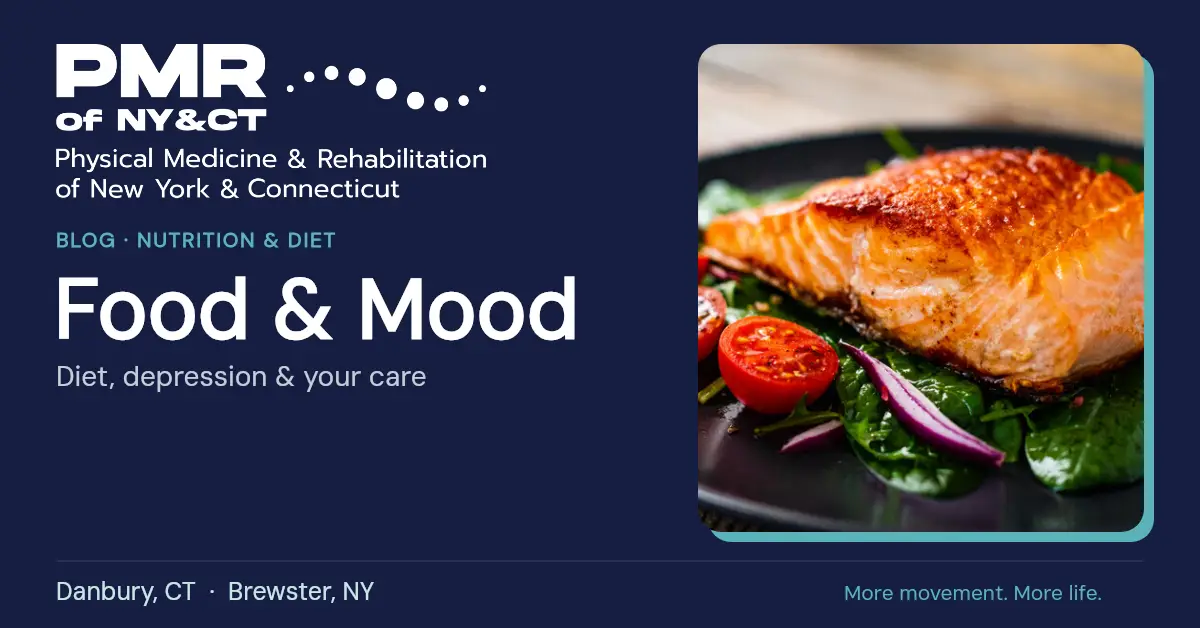
- Fish, especially fatty fish such as salmon and sardines, for omega-3 fatty acids
- Olive oil as your main fat
- Fewer sweets, sugary drinks, processed meats and packaged snacks
Two B vitamins deserve a mention. Folate is found in leafy greens, beans and lentils. Vitamin B12 comes mainly from fish, meat, eggs, dairy and fortified foods, so people who eat a vegan diet may need a fortified food or supplement. Low levels of either can cause fatigue and mood changes, and a blood test can check.
Habits that may work against your mood
Watch for these patterns:
- Alcohol. It’s a depressant, it disrupts sleep, and it can interact with antidepressants and other medicines.
- Long gaps between meals. Going hours without eating can leave you tired, irritable and unfocused.
- Too much caffeine. A morning coffee is fine for most people, but large amounts, or caffeine late in the day, can worsen anxiety and sleep.
- Very strict dieting. Cutting out whole food groups or eating too little can drain your energy. If you’re restricting food, bingeing or feeling out of control around eating, tell a doctor, since these can be signs of a treatable eating disorder.
Small steps when depression makes eating hard
When energy and motivation are low, aim for "good enough," not perfect:
- Keep easy foods on hand: frozen vegetables and fruit, canned beans and fish, eggs, yogurt, whole-grain bread and nut butter.
- Eat at roughly regular times, and set a phone reminder if you tend to forget.
- Build simple plates with a protein, a vegetable or fruit and a whole grain.
- Cook a double batch on a better day and freeze half.
- Share a meal with someone when you can.
When it comes to diet and depression, one small change you can keep up is worth more than a big overhaul you can't.
Movement, sleep and pain matter too
Food works best alongside other daily habits. The research on exercise and depression is encouraging: regular physical activity can ease symptoms, and even short walks count. Consistent sleep supports mood as well.
Pain and depression often go together. Ongoing back pain, arthritis or fibromyalgia can make it hard to move, sleep and enjoy daily life, and low mood can make pain feel worse. Treating pain through physical therapy or pain management care may make it easier to stay active.
Signs it's time to get help for low mood
See your primary care doctor or a mental health professional if you feel sad, empty or hopeless, or lose interest in things you used to enjoy, most days for two weeks or more, or sooner if it's hard to get through the day. Depression is common and treatable, and care often includes talk therapy, medicine or both.
If you are in crisis or thinking about suicide, call or text 988 (Suicide & Crisis Lifeline) or call 911.
Frequently asked questions
Can a healthy diet replace antidepressants?
No. Eating well supports your overall health and may help your mood, but it isn't a substitute for treatment your doctor has prescribed. Stopping an antidepressant suddenly can cause discontinuation symptoms, such as dizziness or flu-like feelings, and depression can return. If you'd like to change your treatment, your prescriber can help you plan it safely.
Do omega-3 supplements help with depression?
Research on fish oil supplements for depression is mixed, with some studies finding a small benefit alongside standard treatment and others finding none, so they aren't a substitute for care. Eating fatty fish such as salmon or sardines about twice a week, as the American Heart Association recommends, is a food-first option. Ask your doctor or pharmacist about any supplement first, especially if you take a blood thinner.
Does sugar make depression worse?
There's no good evidence that sugar alone causes depression, but some large observational studies link frequent sweets and sugary drinks with higher rates of depression over time. Whether sugar plays a direct role or reflects other habits isn't clear. Meals that pair protein, fiber and healthy fats tend to keep energy steadier than sweets alone, so treat sugary foods as occasional extras.
How PMR can help with pain
Your doctor or a mental health professional is the right guide for depression itself. If pain is keeping you from moving, sleeping or doing what you enjoy, the team at Physical Medicine & Rehabilitation of NY & CT (PMR) can help alongside that care. Request an appointment and our team will contact you to schedule a visit.
More from the PMR Blog
Continue exploring articles in this topic category.